Thursday 20th June 2024
Day 6: WAW – Mullaghmore Head to Easky Beach
After I left Adele last night, I pondered her words. She told me she had been born around Mullaghmore and never wanted to be anywhere else. Her partner, like me, is an adventurer, and she asked me ‘what are you looking for?’ That is a good question that I couldn’t really answer.
Sometimes I wish I was the contented sort, happy with my lot. But alas, I have the wanderlust. I pondered on it: Is never leaving your home town anxiety, safety, or indeed contentment? Is travel anxiety, avoidance of the mundane, or is it an insatiable curiosity to want to know what is over that next hill, or distant land? Big questions indeed, but if our ancestors never possessed this curiosity and spirit of adventure, we would never have left our shores…
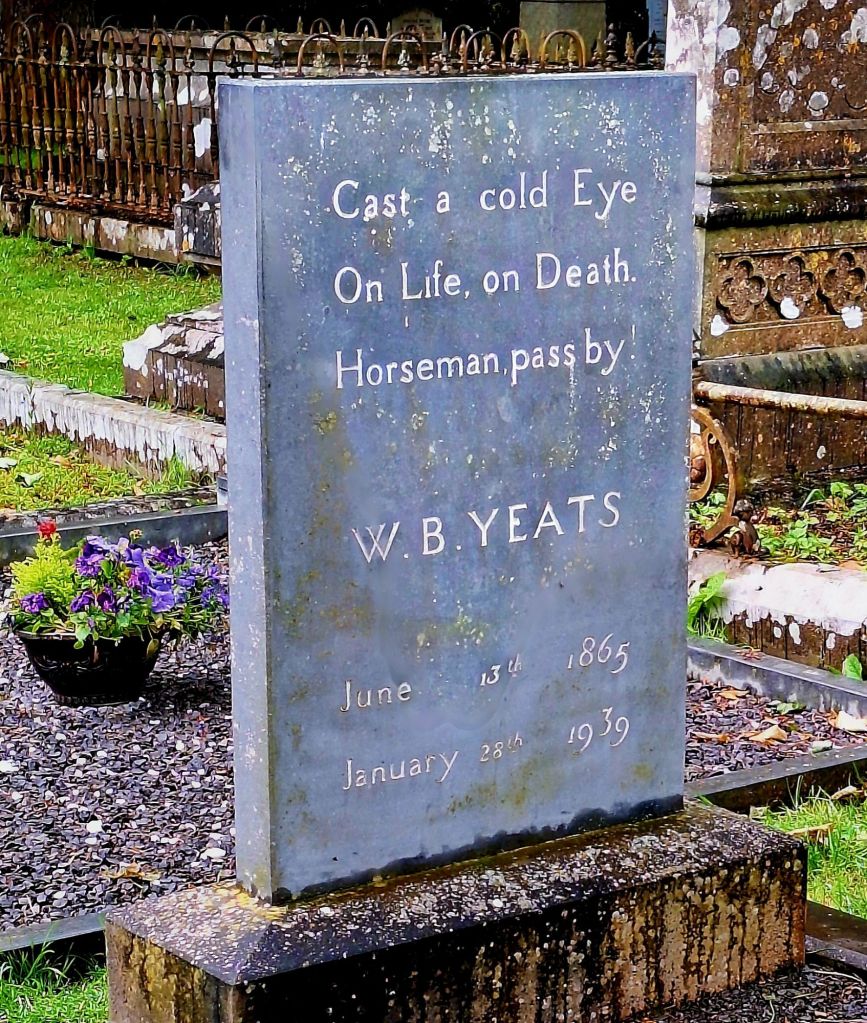
Leaving my cosy berth at Mullaghmore about eight-thirty, I headed for Yeats Graveyard, Drumcliff cemetery.
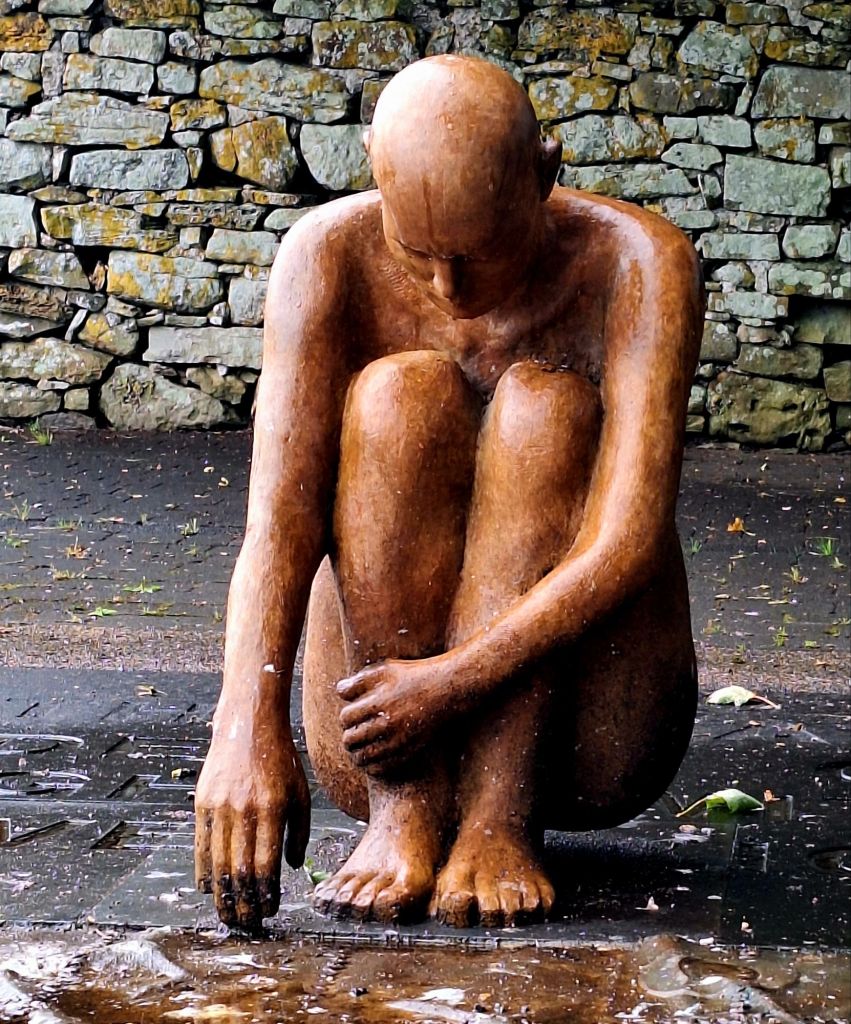
We are now in Yeats country, and there are tributes to his work everywhere. There is a sculpture in the cemetery and on the ground the words: “Aedh Wishes for the Cloths of Heaven.”
“Had I the heavens’ embroidered cloths,
Enwrought with golden and silver light,
The blue and the dim and the dark cloths
Of night and light and the half light,
I would spread the cloths under your feet:
But I, being poor, have only my dreams;
I have spread my dreams under your feet;
Tread softly because you tread on my dreams”
In search of coffee, I headed for Rosses Point. I was going to make a run for it last night, but no parking reports put me off.
You could park down by the yacht club, and I didn’t see any “no parking” signs. A young girl played loud, mournful music in her car—a breakup or a bad morning perhaps? There were a few people turning up with swimming gear; the Irish are really into steam rooms and sea swimming.
Rosses Point over looks Coney Island, named after it’s Rabbits. Van Morrison also wrote a song about it, one of my favourites.
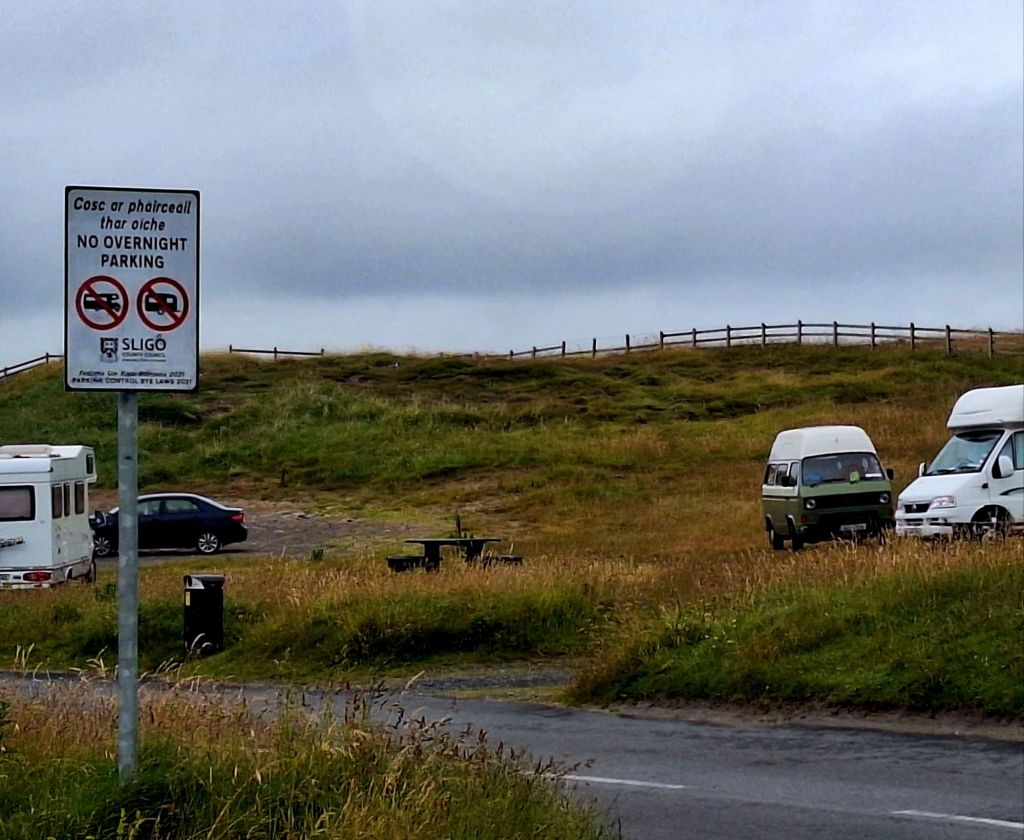
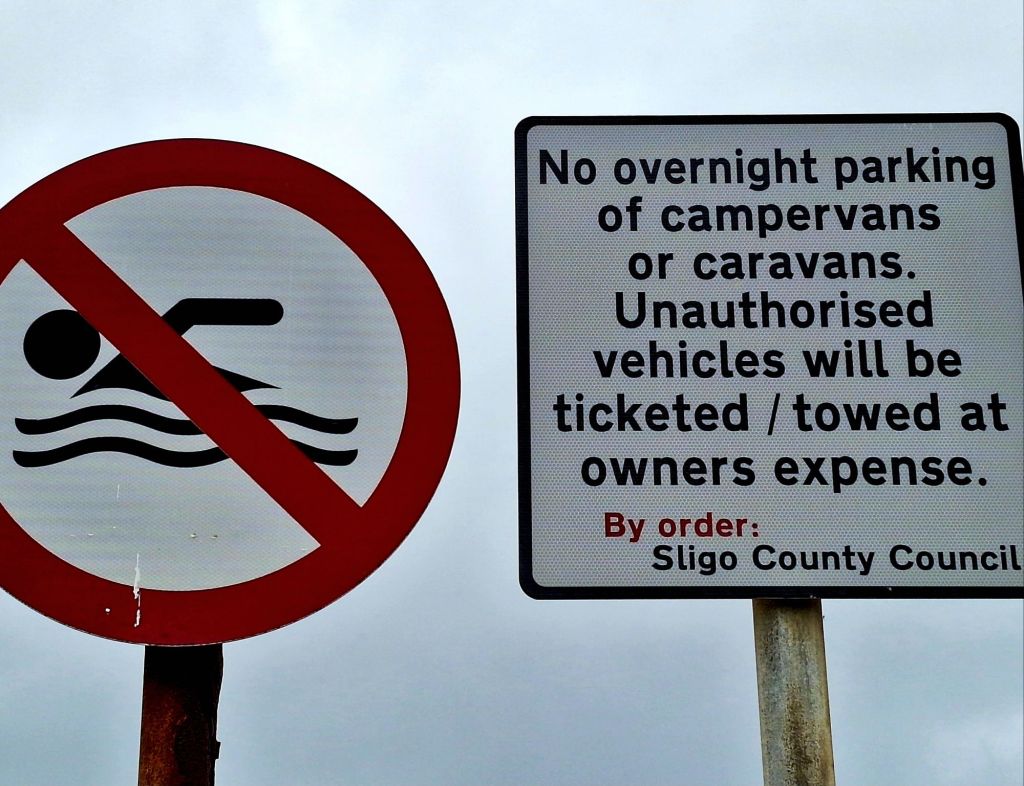
Parking was prohibited on the point itself. However, that didn’t seem to stop people. When I arrived late morning, there were scores of vans parked on the grass. I don’t know why they think this makes them exempt; it’s really taking the piss, as there’s a large car park and a huge campsite above it.
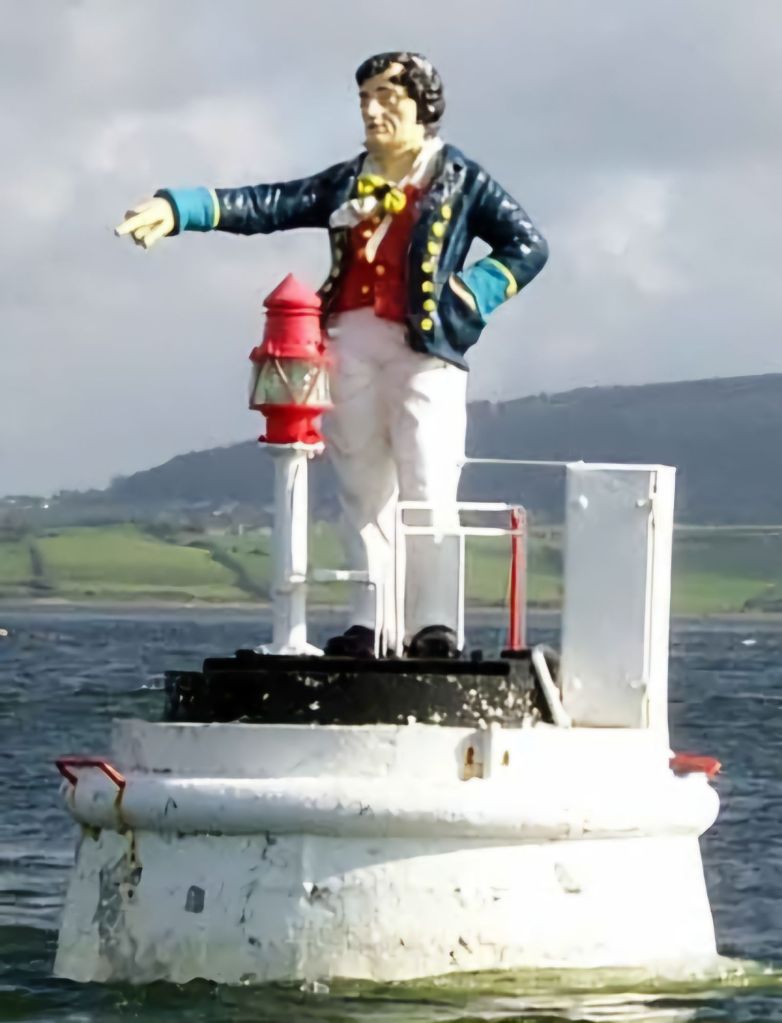
I stayed long enough to see ‘The Metal Man’ which stands at the entrance to Sligo Harbour and is one of only two in the country. Its purpose is to guide ships through the rocky narrow channel of Rosses Point into Sligo Port
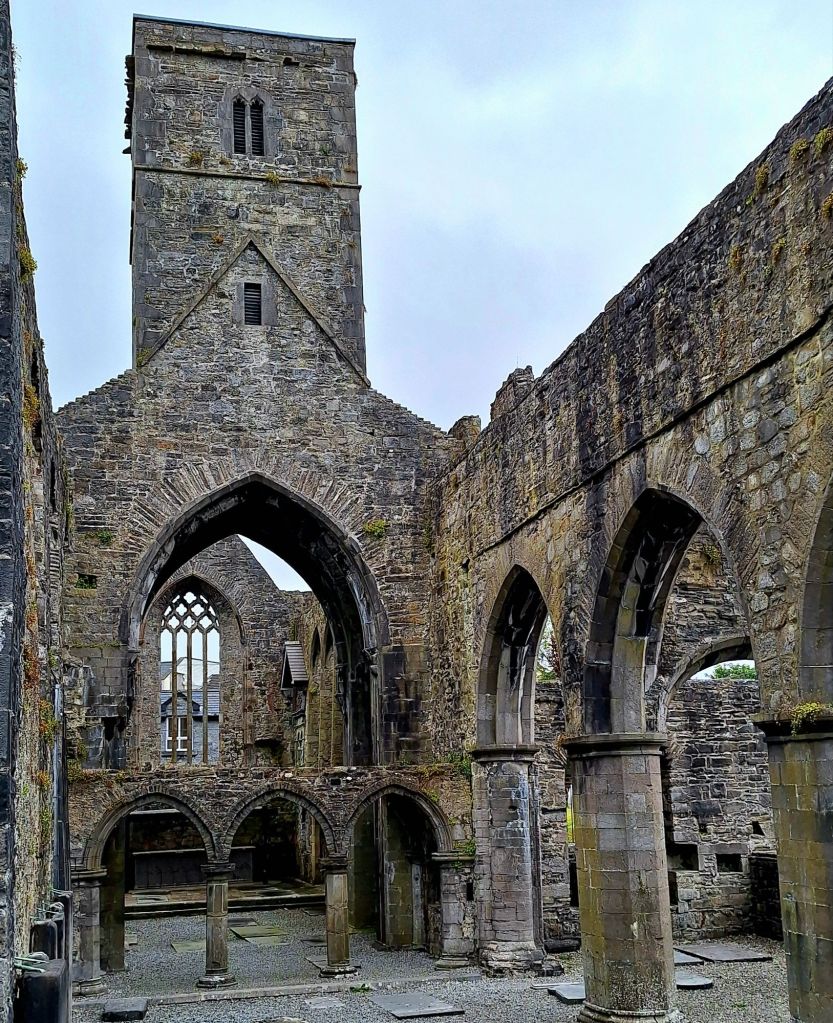
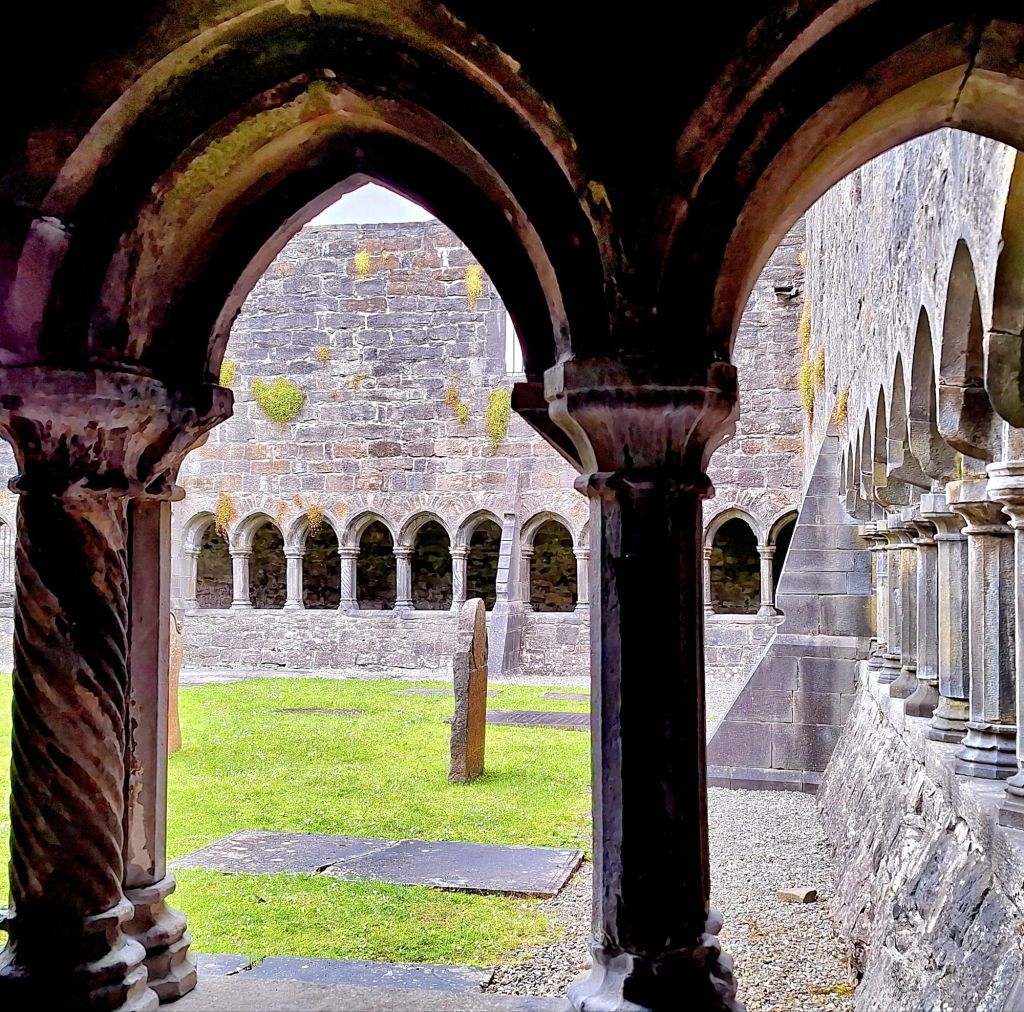
No coffee to be had here either, so I headed to Sligo Abbey, a Dominican Friary (€4). I arrived just in time to join a school party being marshalled around by a very fervent guide. I left them to it and sought out the tranquil cloisters.
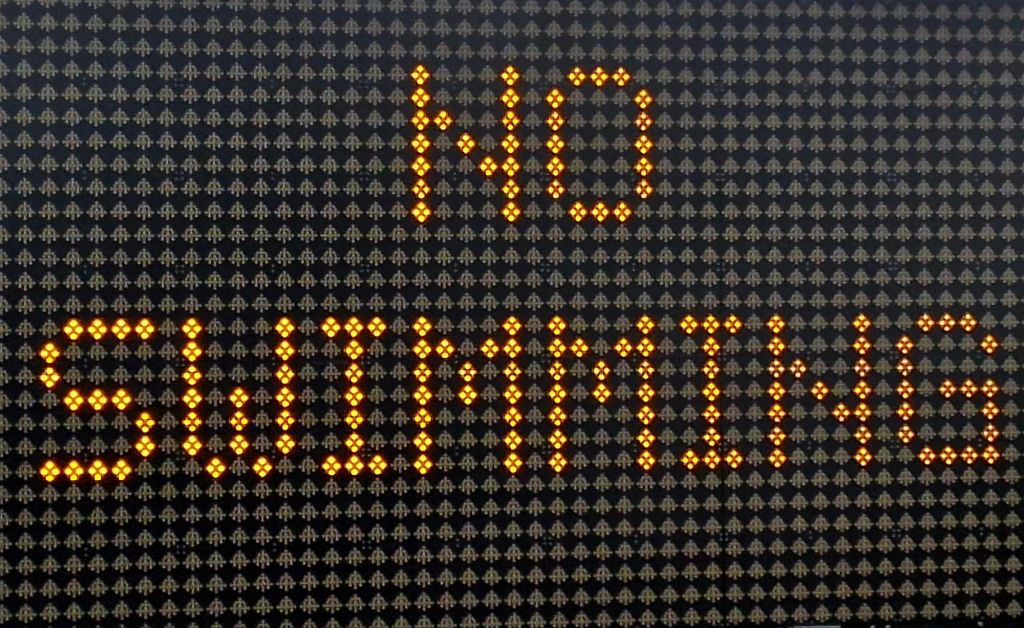
Strandhill beach was my next stop, a very busy carpark, lots of surfers looking out to sea, but signs everywhere warned of no swimming.

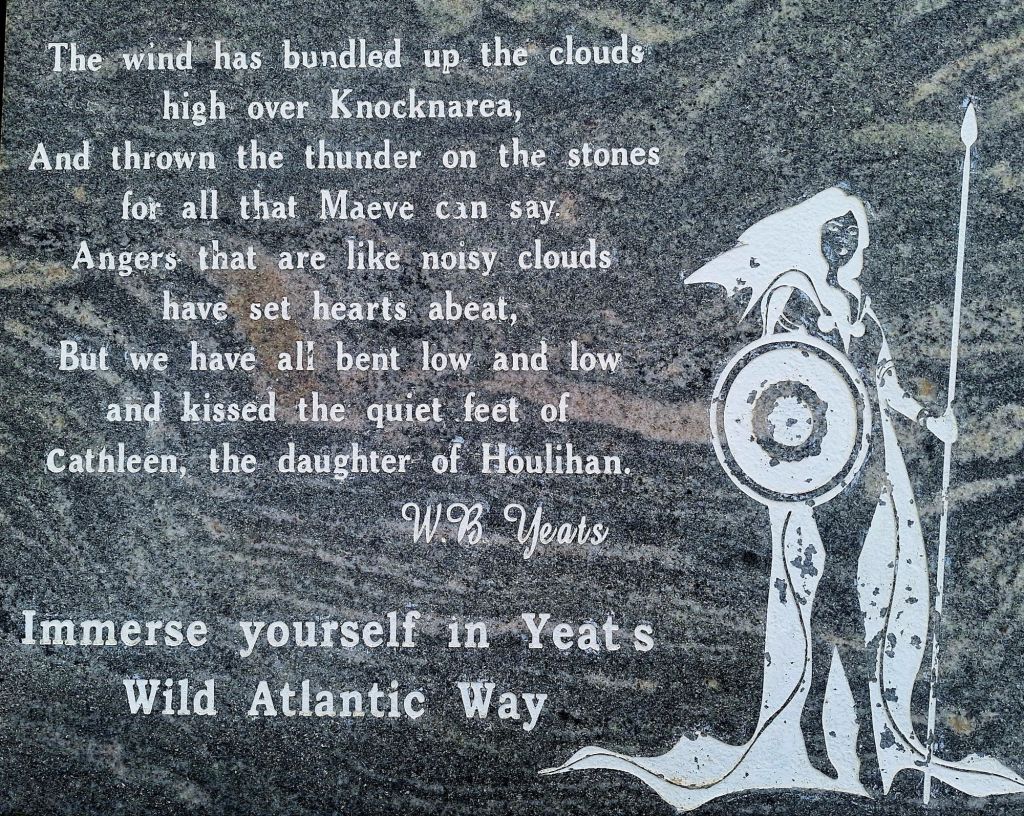
More Yeats…
I enjoyed coffee and a pastel de nata and petted a beautiful rescue collie

Then the day got very interesting, Queen Maeve’s Cairn of Knocknarea is the largest and most visible neolithic monument in the west of Ireland. At the trail head there is another plaque with ‘The Hosting of the Sidhe” by W. B. Yeats’
“The host is riding from Knocknarea
And over the grave of Clooth-na-Bare;
Caoilte tossing his burning hair,
And Niamh calling Away, come away:
Empty your heart of its mortal dream.
The winds awaken, the leaves whirl round,
Our cheeks are pale, our hair is unbound,
Our breasts are heaving, our eyes are agleam,
Our arms are waving, our lips are apart;
And if any gaze on our rushing band,
We come between him and the deed of his hand,
We come between him and the hope of his heart.
The host is rushing ‘twixt night and day,
And where is there hope or deed as fair?
Caoilte tossing his burning hair,
And Niamh calling Away, come away”
From the carpark, depending on your fitness level and route taken, it’s possible to reach the summit of Knocknarea (1073ft) in 30-40 minutes. As you crest the summit, you are greeted by an enormous, unopened, and unexcavated passage-grave. There are also six more Neolithic monuments on or near the summit.
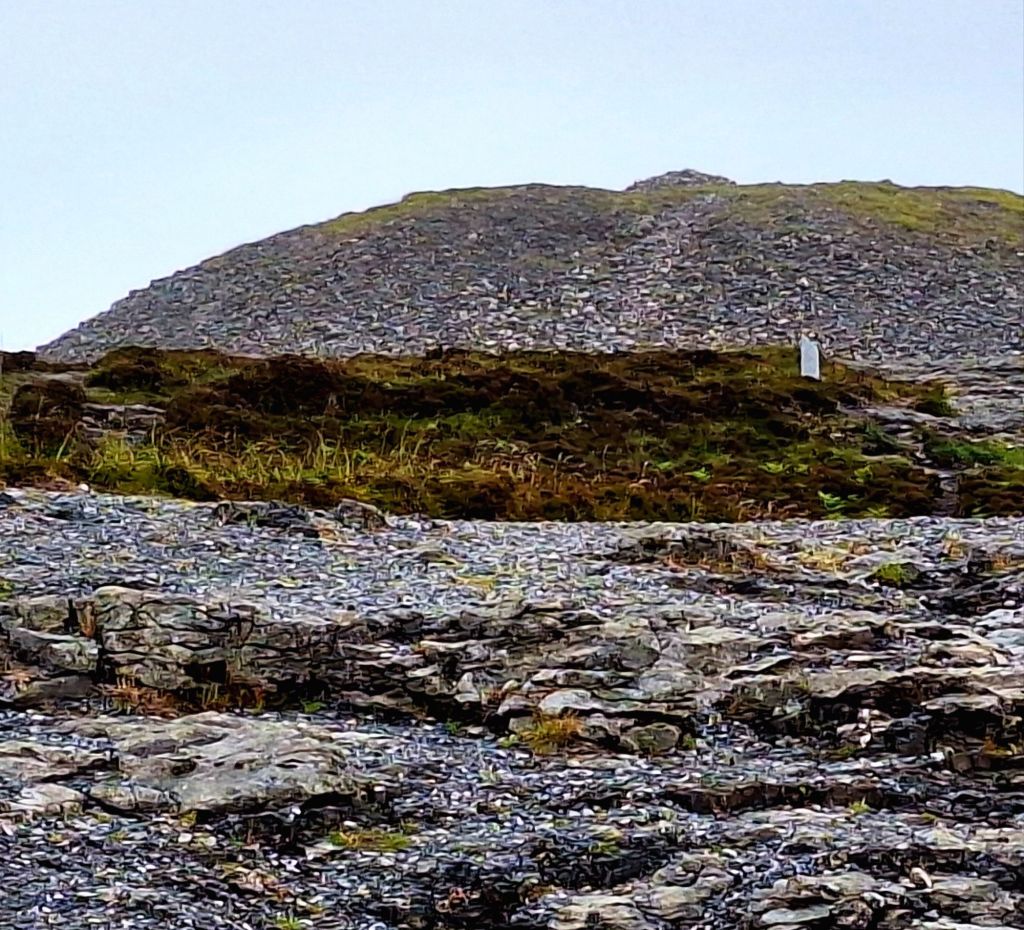
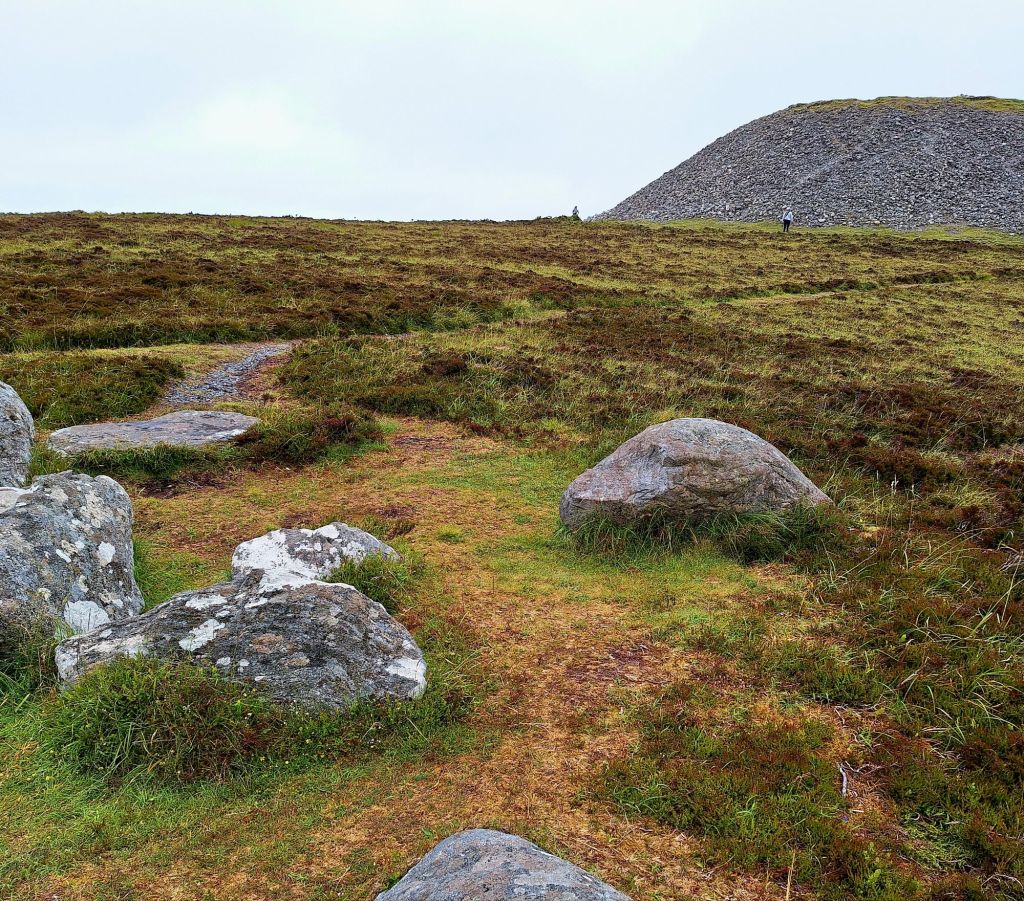
It was probably built between 3,500 and 3,200 BC, and is part of the Irish passage-grave culture, which had arrived in Sligo, most likely from the shores of Brittany by around 4,200 BC
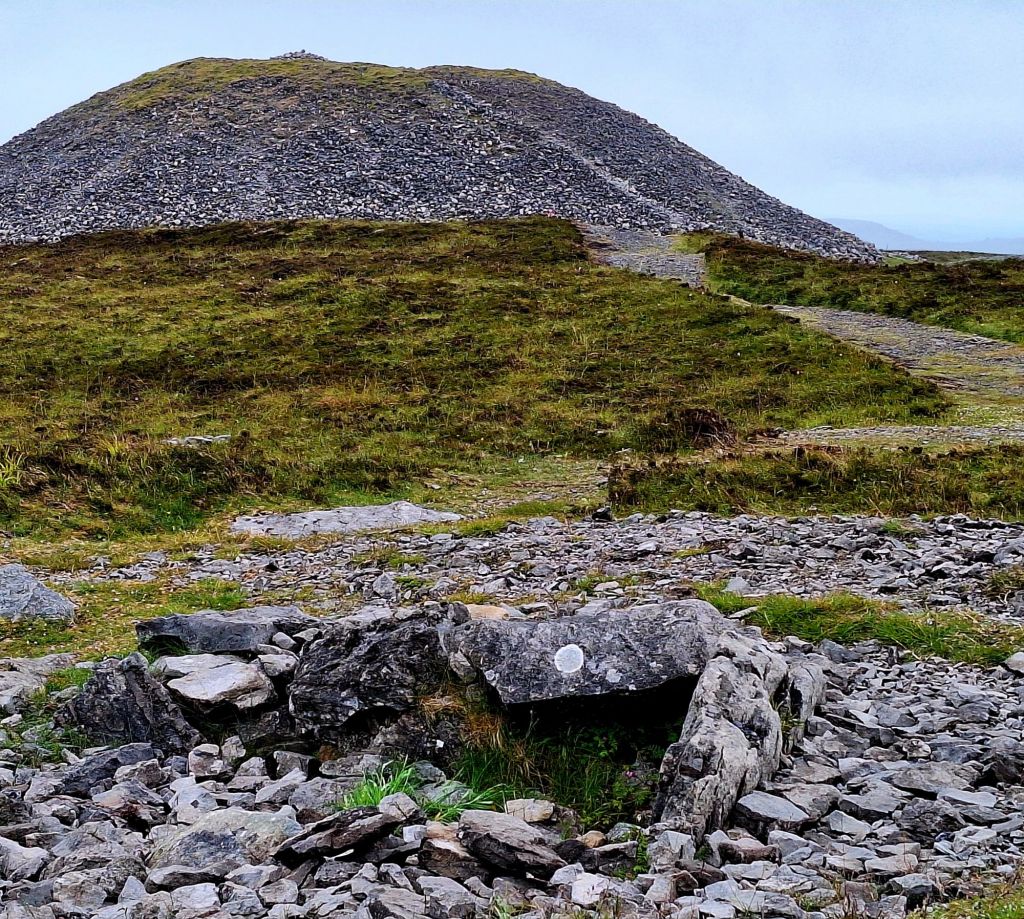
Can you imagine, thousands of years ago, climbing to the summit of Knocknarea, burying your ‘queen’, then quarrying enough stone to cover the grave? It’s mind-blowing stuff.
It’s a great place to ponder, soak in the atmosphere, and enjoy the views. Apparently, on a clear day, you can see Croagh Patrick. But for me, it was about enjoying the sound of skylarks above, the wind blowing, and the distant chime of church bells from the town below.
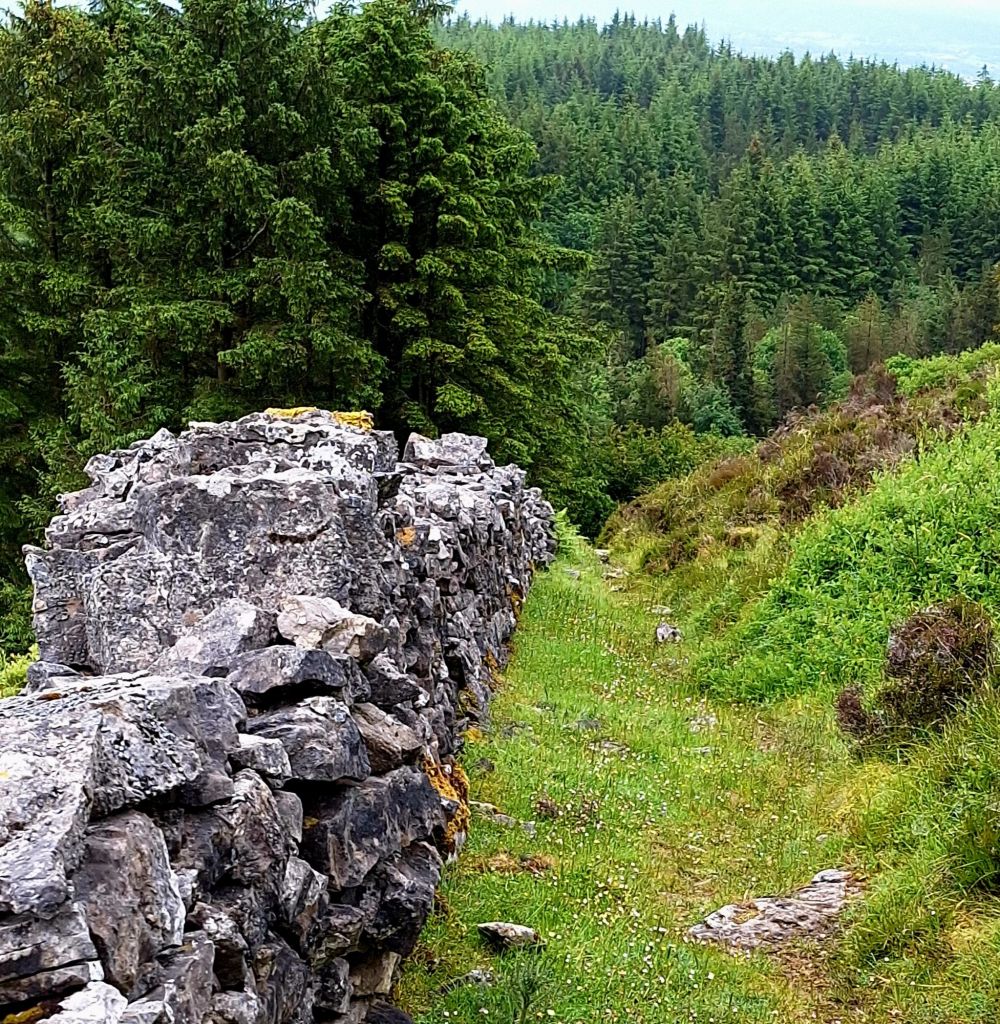
I returned via a circular route alongside the perimeter wall, down through some woods and back to the main track.
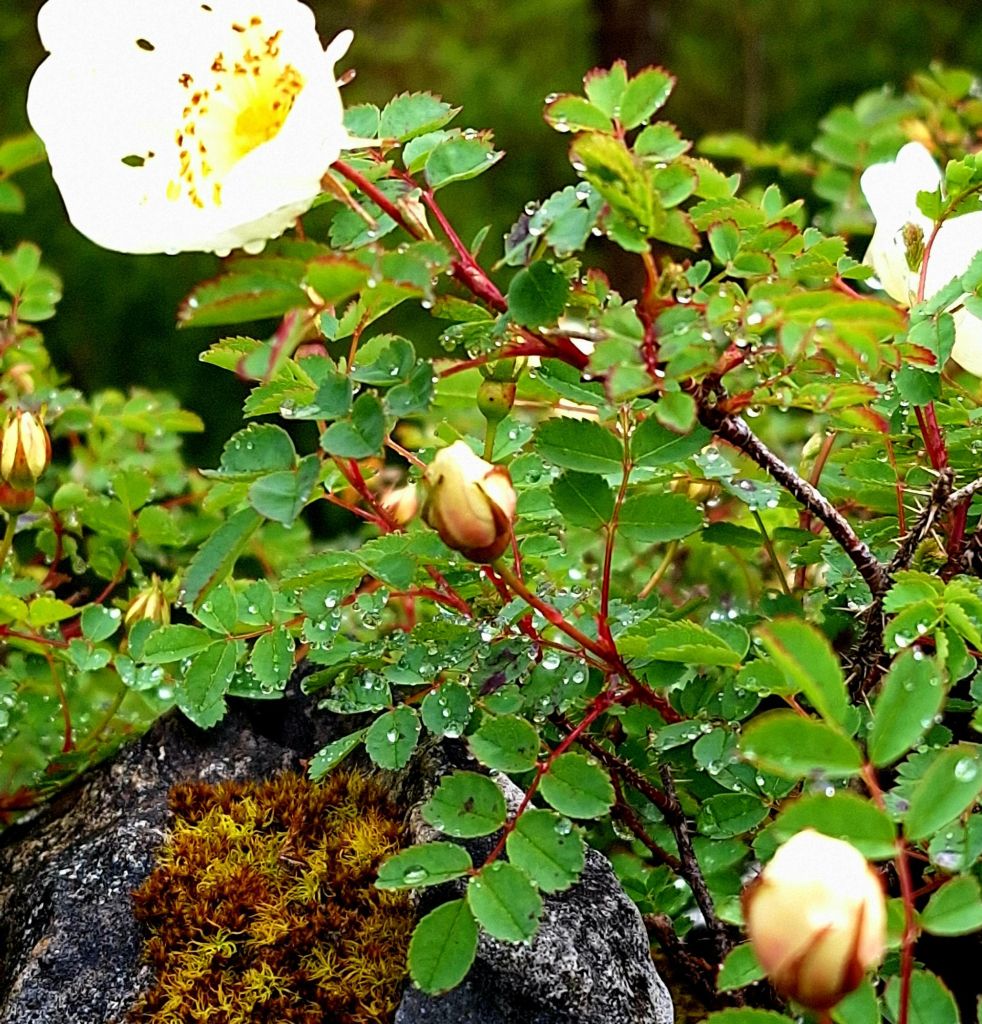

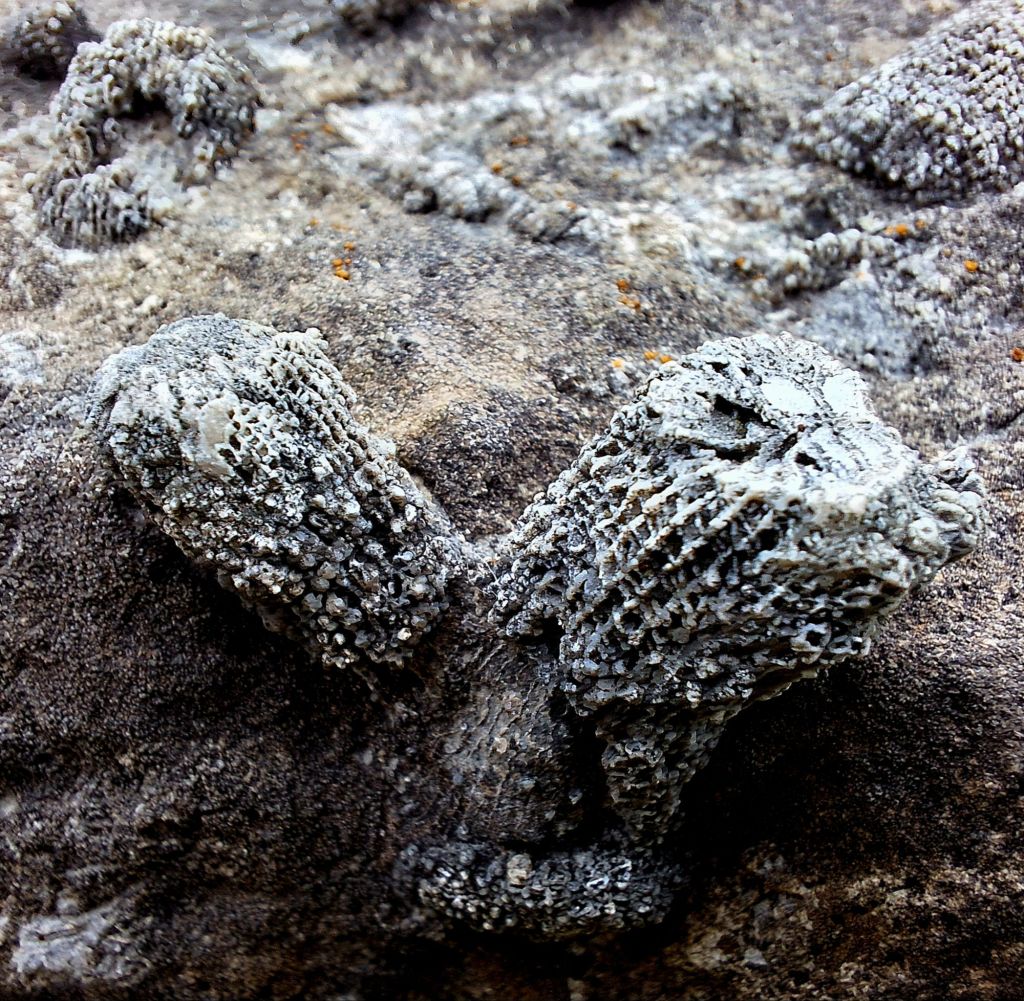
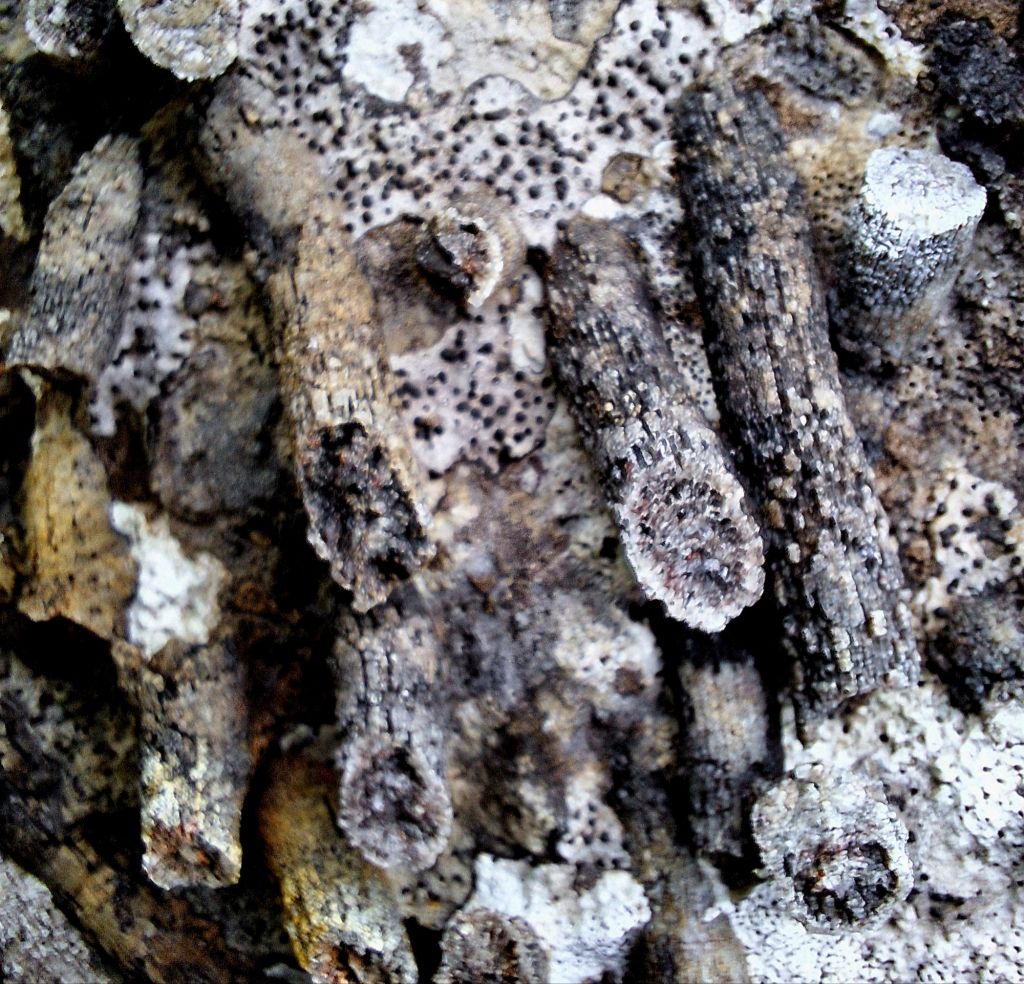
Fascinatingly, the stone walls contained fossilised crinoids, once an ancient sea bed…
And if that wasn’t amazing enough, there is another passage grave Cain at Carrowmore Megalithic Cemetery (€5). It is the oldest and the densest concentration of Neolithic tombs in Ireland.
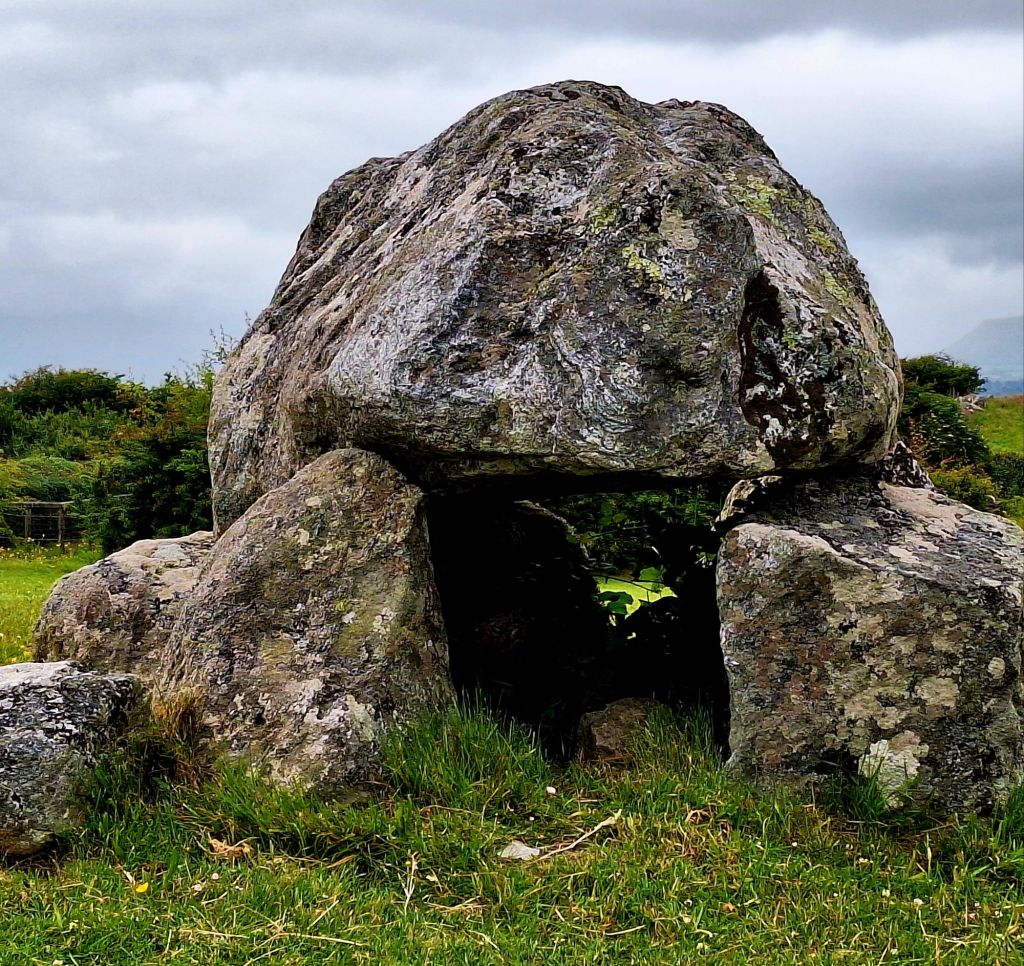
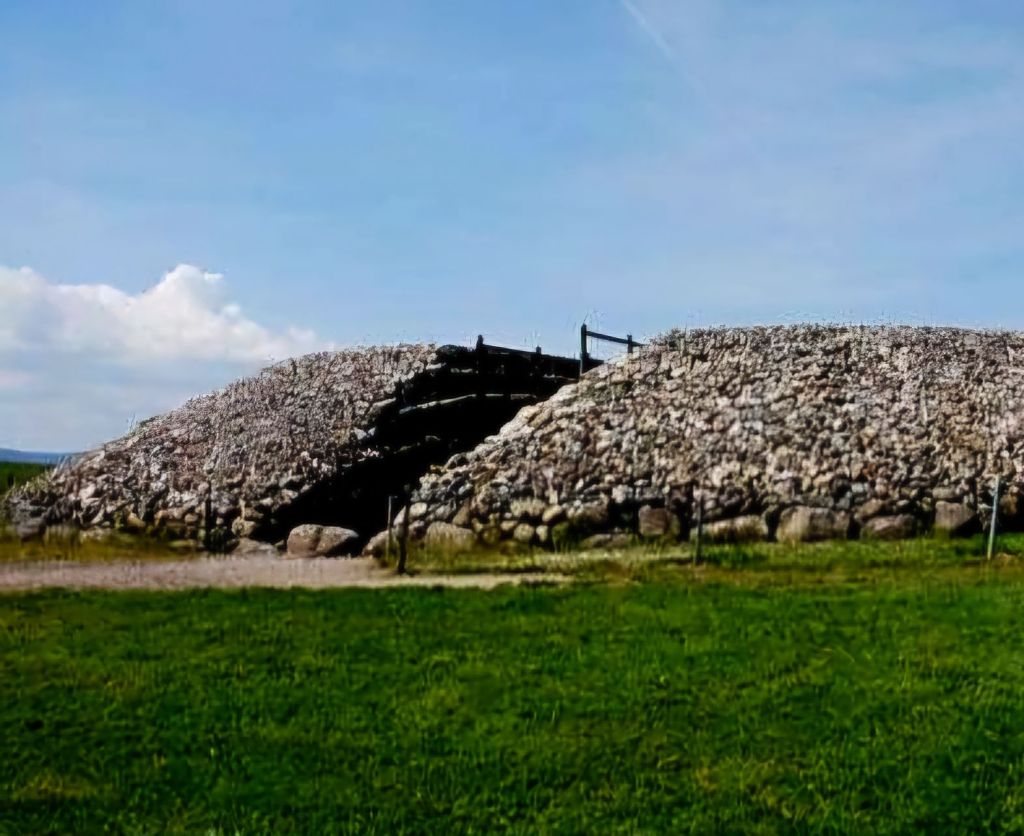

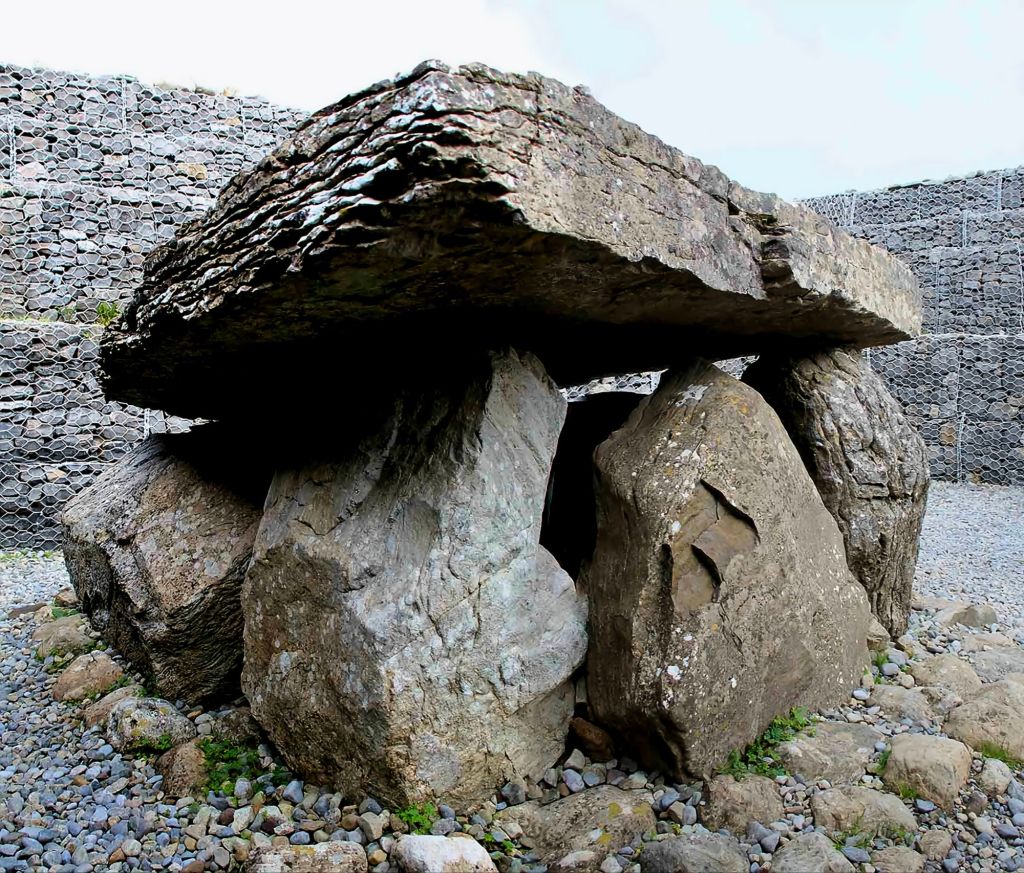
Remains of over 35 passage tombs are found here, constructed almost 6,000 years ago. Most of the sites are “satellite tombs” which surround the largest monument, placed on the high point of the plateau, the cairn (now restored) called Listoghil. Queen Maeve’s Cairn can be seen in the distance on Knocknarea.
What a fantastic day! Hitting the road once more, I set off in search of afternoon cakey tea. First stop was Aughrus Head, but there was no room at the inn. Why is it so busy everywhere on a weekday?
So, I carried on to Easky Beach (or Easky Pier and Beach), with its landmark O’Dowd’s Castle, otherwise known as Rosslee Castle. It is an internationally renowned surfing destination, and I had struck gold with this heavenly parking place. So, even though it was only 3 p.m., I dropped anchor for the night.
The landscape is very reminiscent of the Burren in Galway Bay. A fierce ocean and fossil reefs all along the shore create a surfer’s paradise, with vans, wetsuits, and surfing gear all along the headland. Not a “no parking” sign to be seen, unless I’m parked right in front of it!
And I’m parked up next to a castle, and just when I thought the day couldn’t get any better? It could, the whole shore is a fossilised seabed
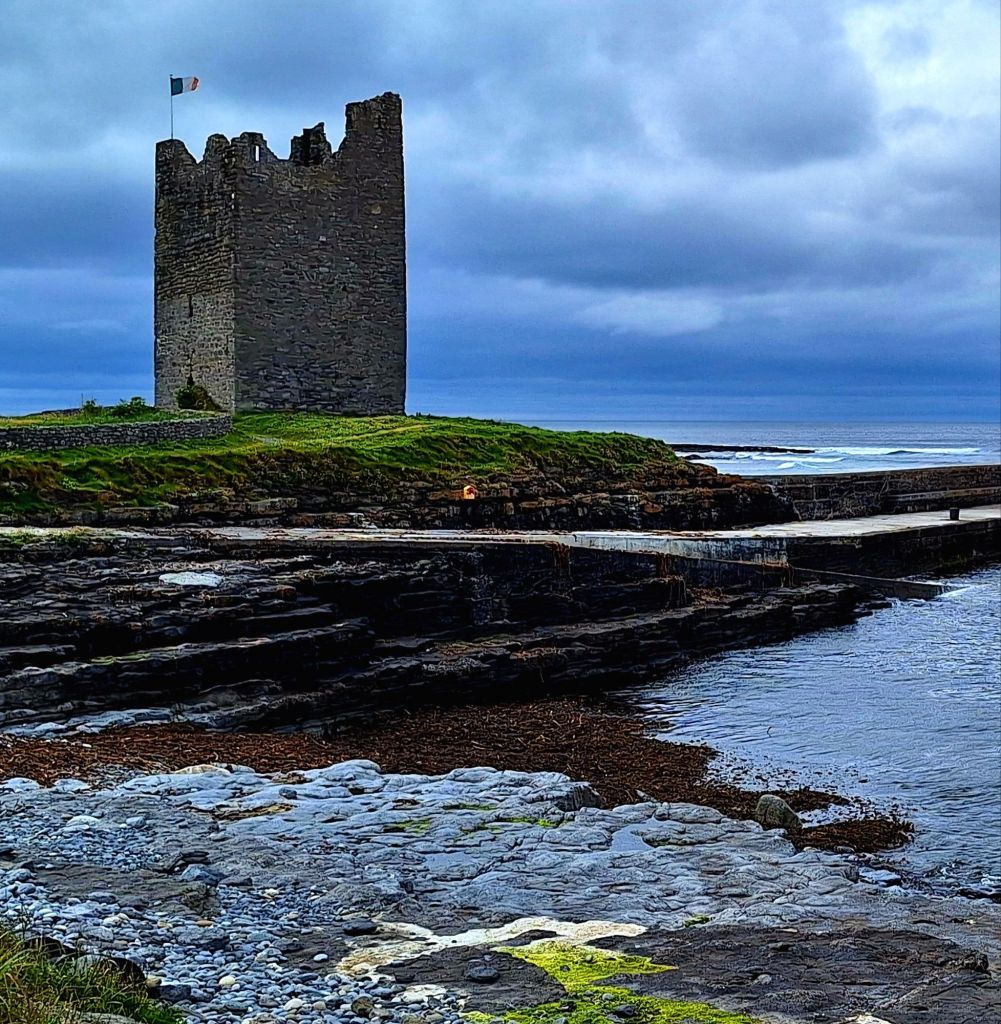
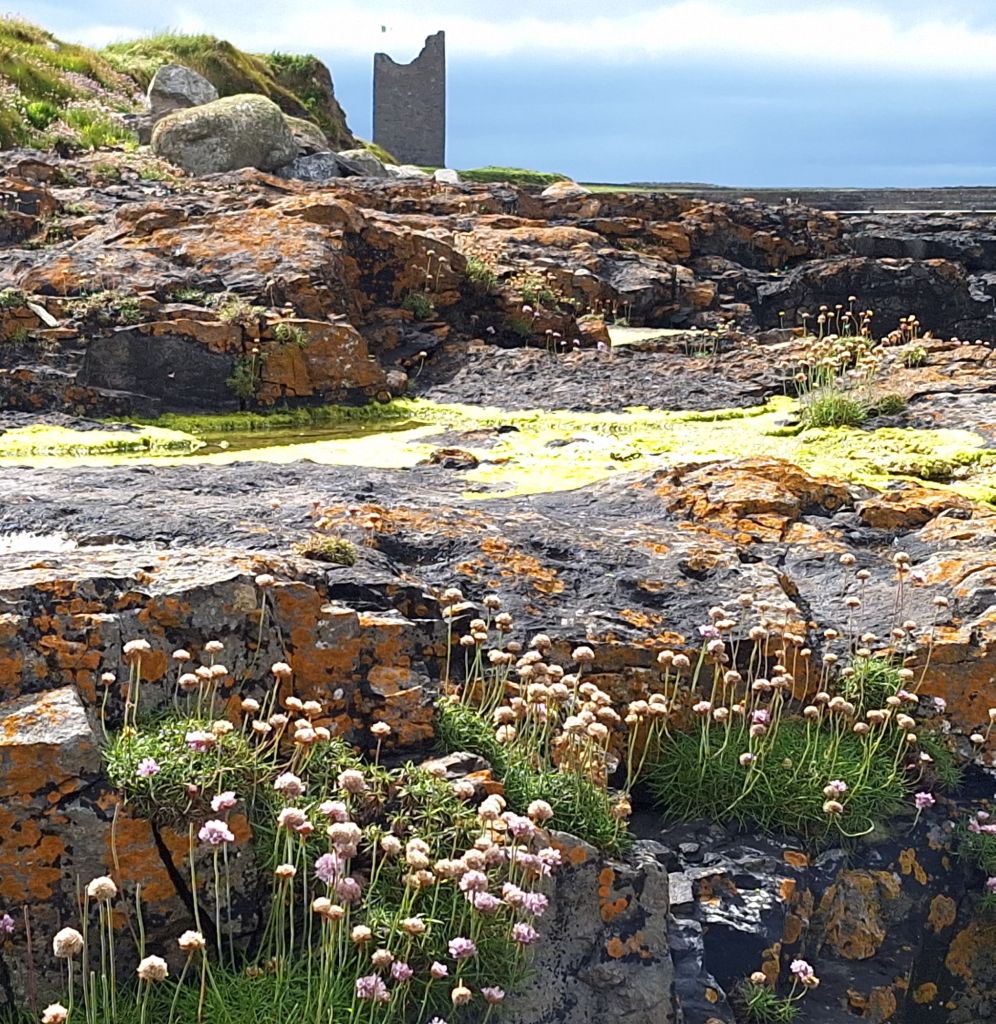
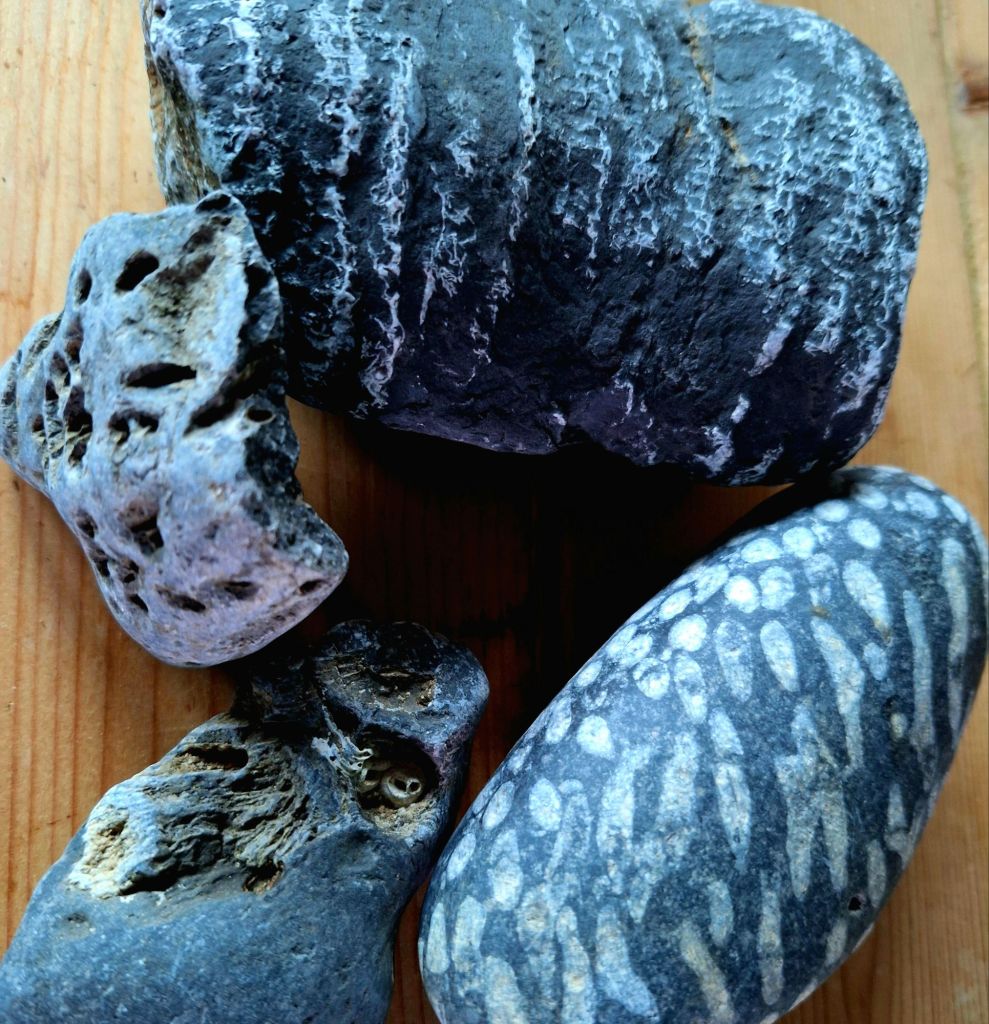
You literally trip over fossil crinoid and corals. It was a fun afternoon for me
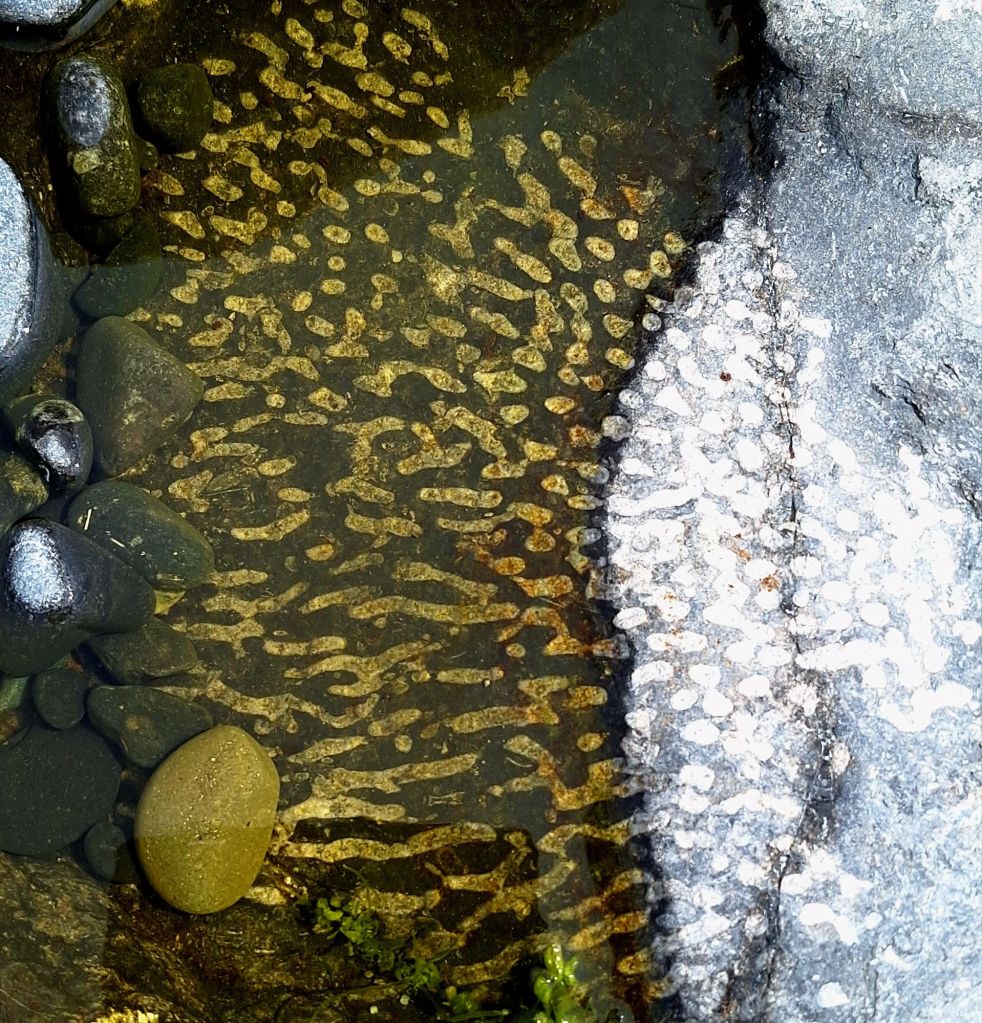
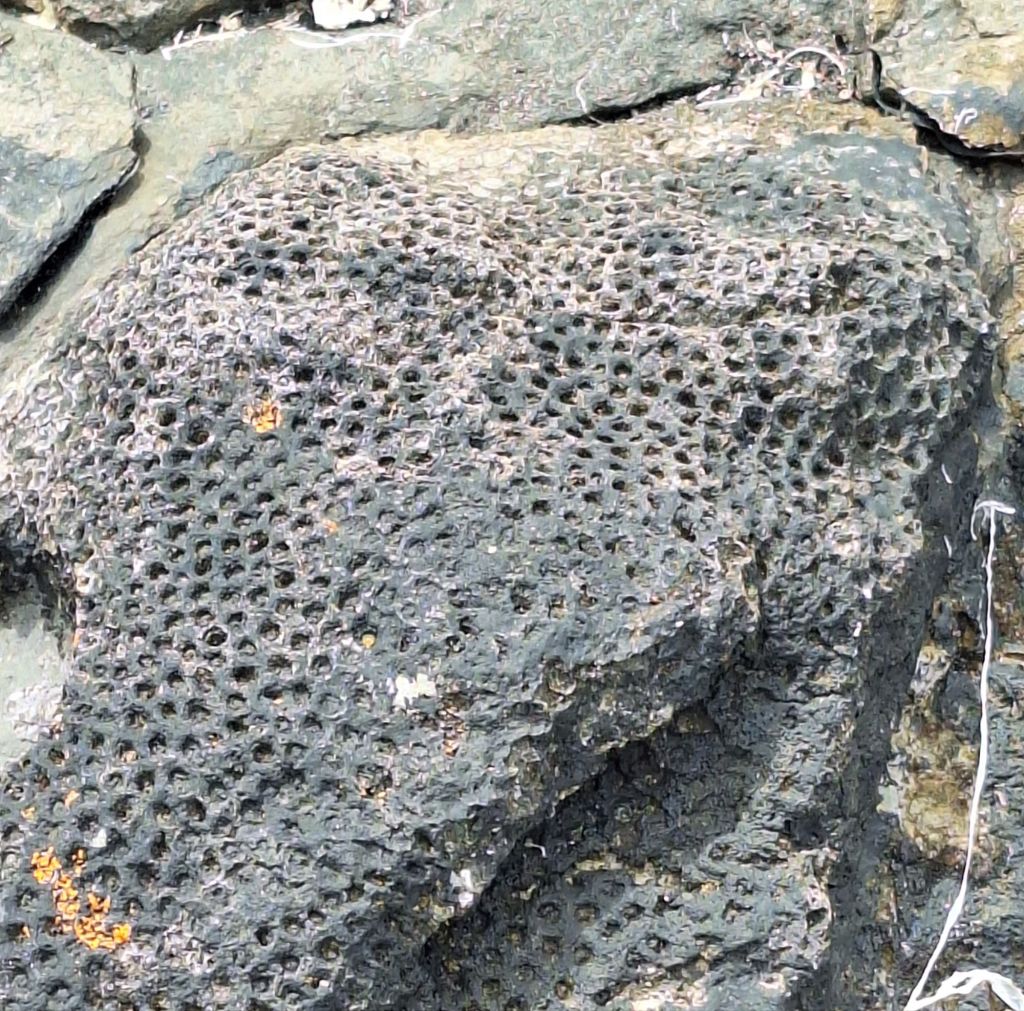
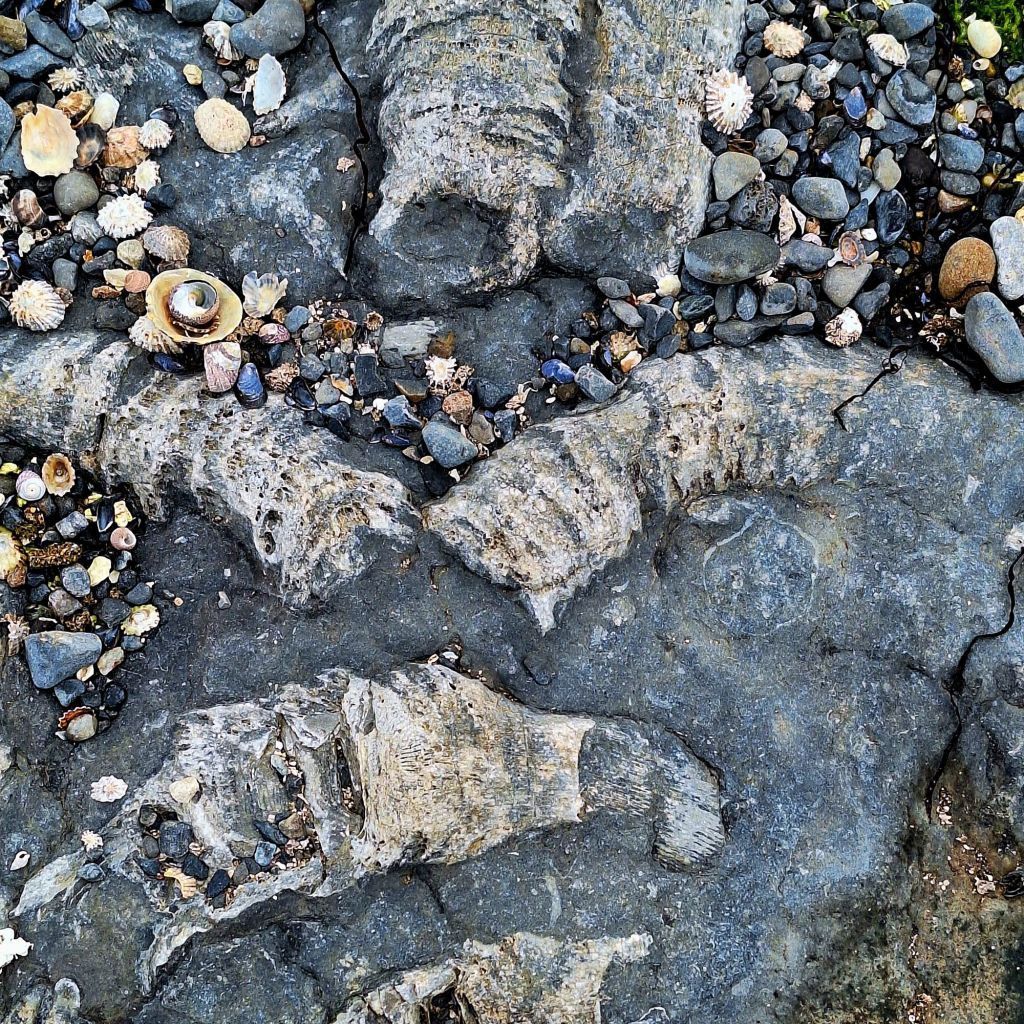
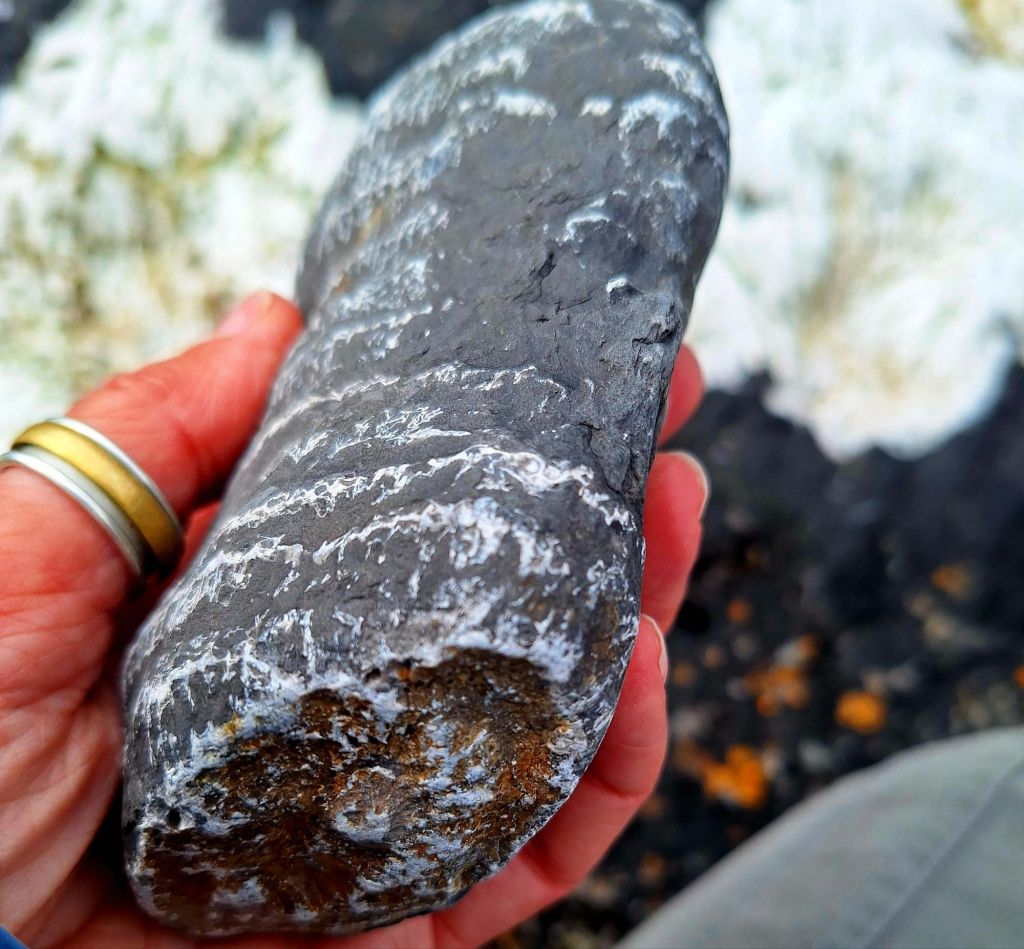
Fossil finds for today, easy pickings too
It’s my last day on the WAW tomorrow, as I pause to head for Ballintubber Abbey and the start of my walk. There is still a lot of the WAW to do; it doesn’t look far, but the route has many tendrils, and there is much to see.
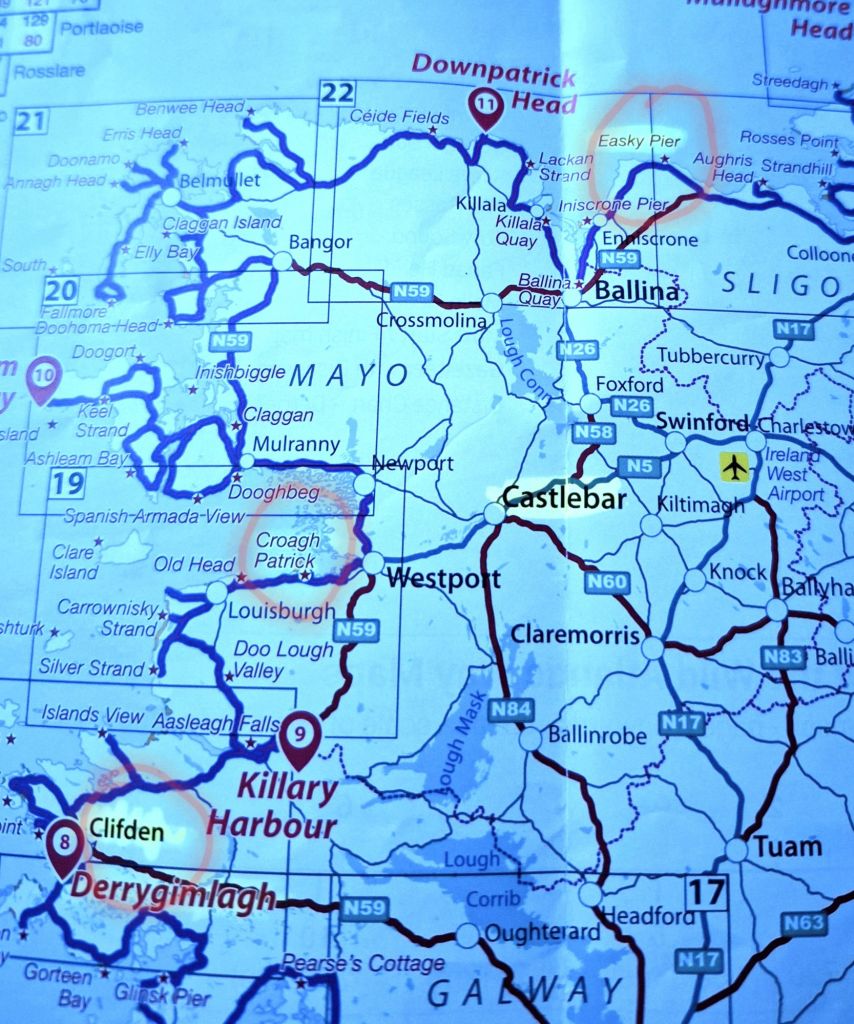
So the plan tomorrow is to go as far as Downpatrick Head, then drive straight to Ballintubber Abbey. According to Park4night, you can park there over night
That’s it goodnight


 Tales From The Trails
Leave a comment