Saturday 22nd June 2024
Day 8: Tochar Padraig and Croagh Patrick – ‘the one that got away‘
A peaceful night in the Abbey carpark, as one might hope. A few comings and goings, presumably people going to mass. But no one seemed to mind my presence
Waking early, I prepared for the big day ahead. The longest of the surviving pilgrimage roads is the Tóchar Phádraig, which leads to Croagh Patrick, ‘the site of St Patrick’s first legendary battle with the devil’s mother and a flock of demon birds’…
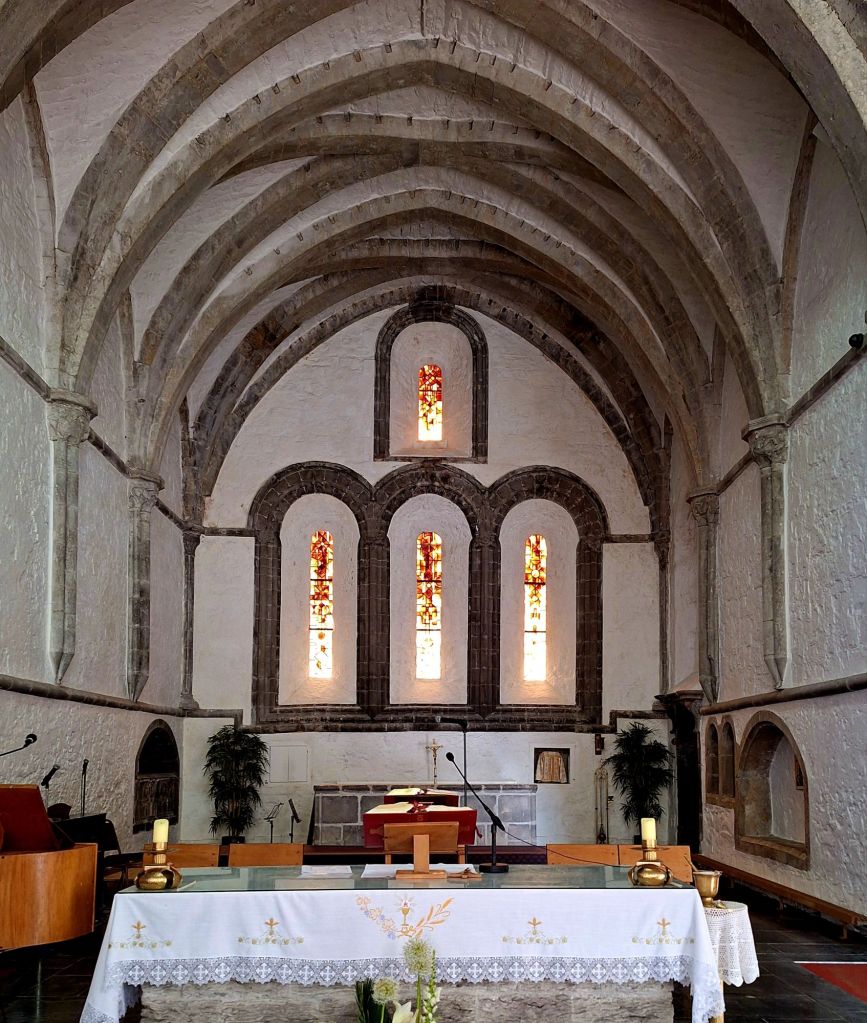
The Tóchar Phádraig is one of the 5 passported trails of the The Pilgrim Paths of Ireland. It starts at Ballintubber Abbey an Augustinian Abbey, built in 1216
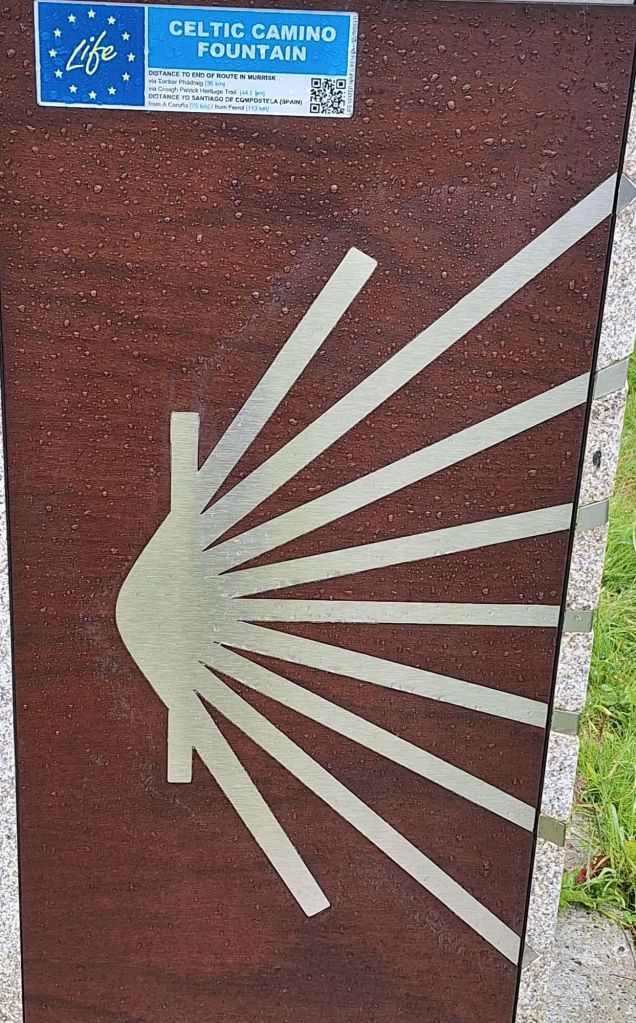
Breakfast, coffee, packed lunch, and all my gear for the day. Collected my “holy water” from the Pilgrim Fountain, then wandered through the cemetery to the Abbey
Registration was from 8:15 AM in the visitor centre. A tall, anxious woman, who merely looked urgent rather than doing much, ushered people toward other assistants. To walk the Tóchar Phádraig, pilgrims must register at Ballintubber Abbey before embarking on the 35 km (22 mile) path to Croagh Patrick. Permission from landowners is essential; without registration, there’s no walk.

All registered, I was directed inside the Abbey, where I was invited to light a candle before leaving. Sitting in silence with other pilgrims, all in our hiking gear, we seemed to wait for ages. As people entered and left, there was much kneeling and crossing of the chest, making me feel rather out of place.
Our hands were stamped with a small green cross—apparently, landowners have the right to challenge you, and this stamp serves as evidence of registration.
Finally, we were called to gather. Our walk leader, Richard, a quiet, gently spoken man, welcomed everyone and gave a short talk. He was briefly interrupted by the tall anxious lady, who shouted, “Can you move them along!” in a lilting Irish ascent
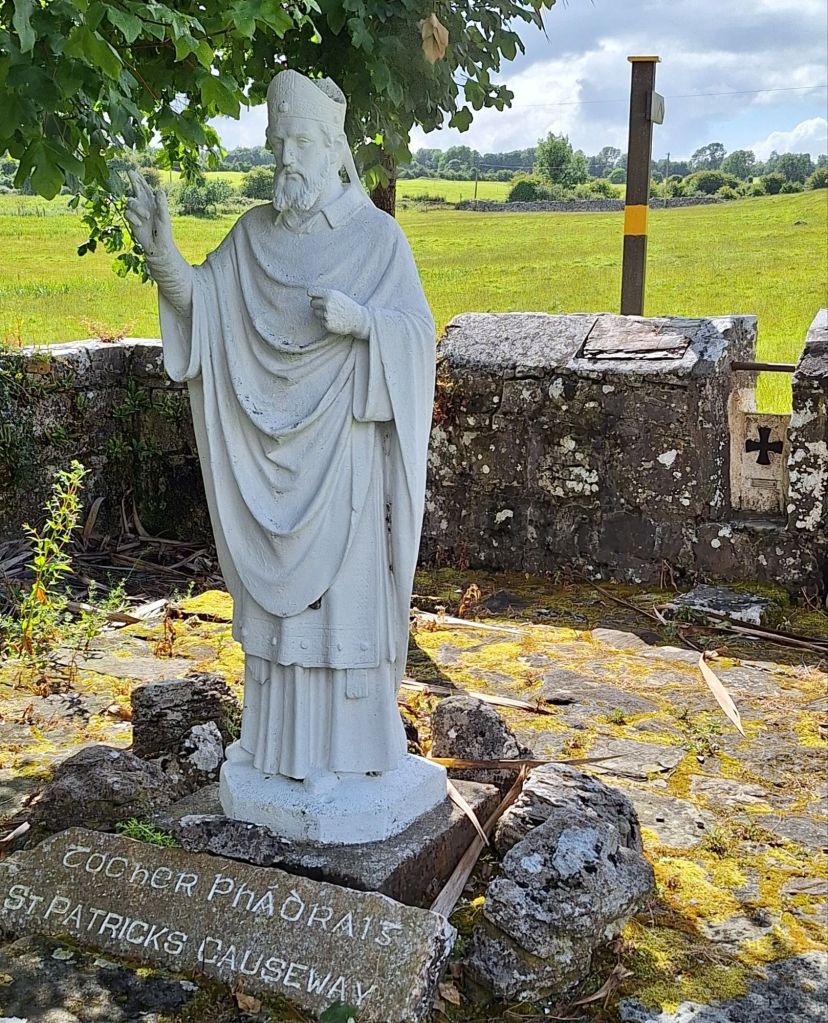
After a momentary pause, Richard continued, asking us to consider why we were embarking on the walk. We were then invited to pick up and carry a sharp stone; instructions would be given later in the day on what to do with it.
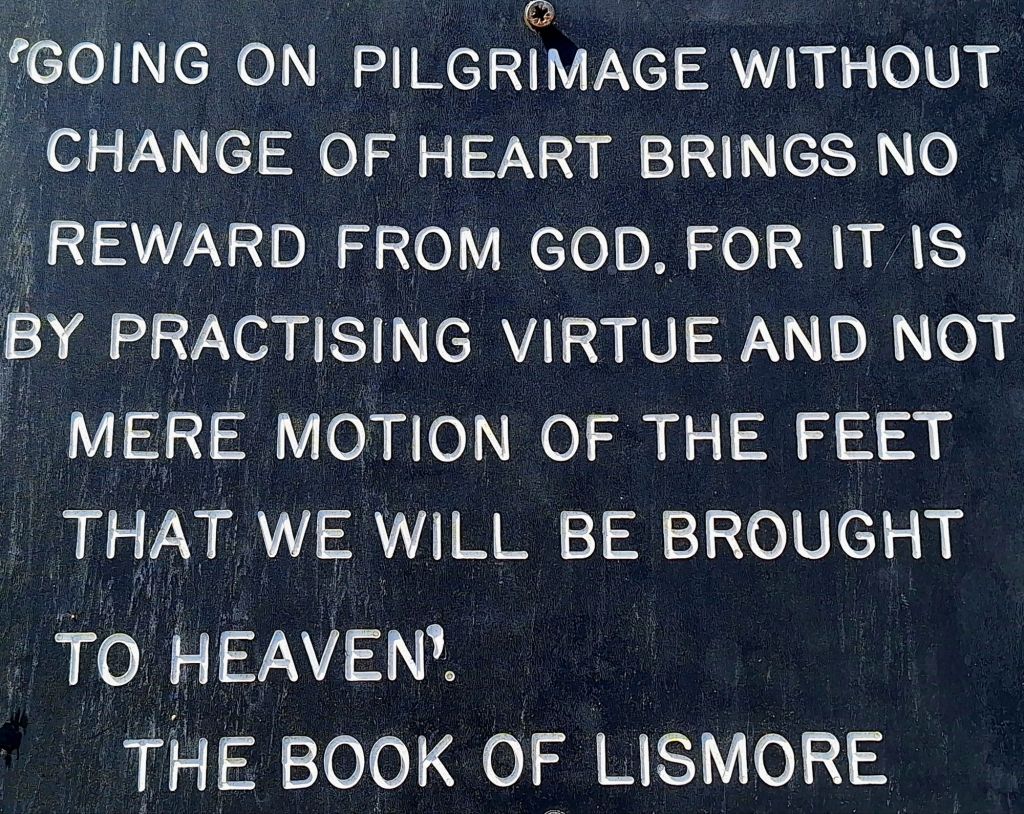
The sentiment was that we all have sharp edges, and I guess the hope was these would be softened en route. We were encouraged to get to know one another, and all food and snacks would be shared.
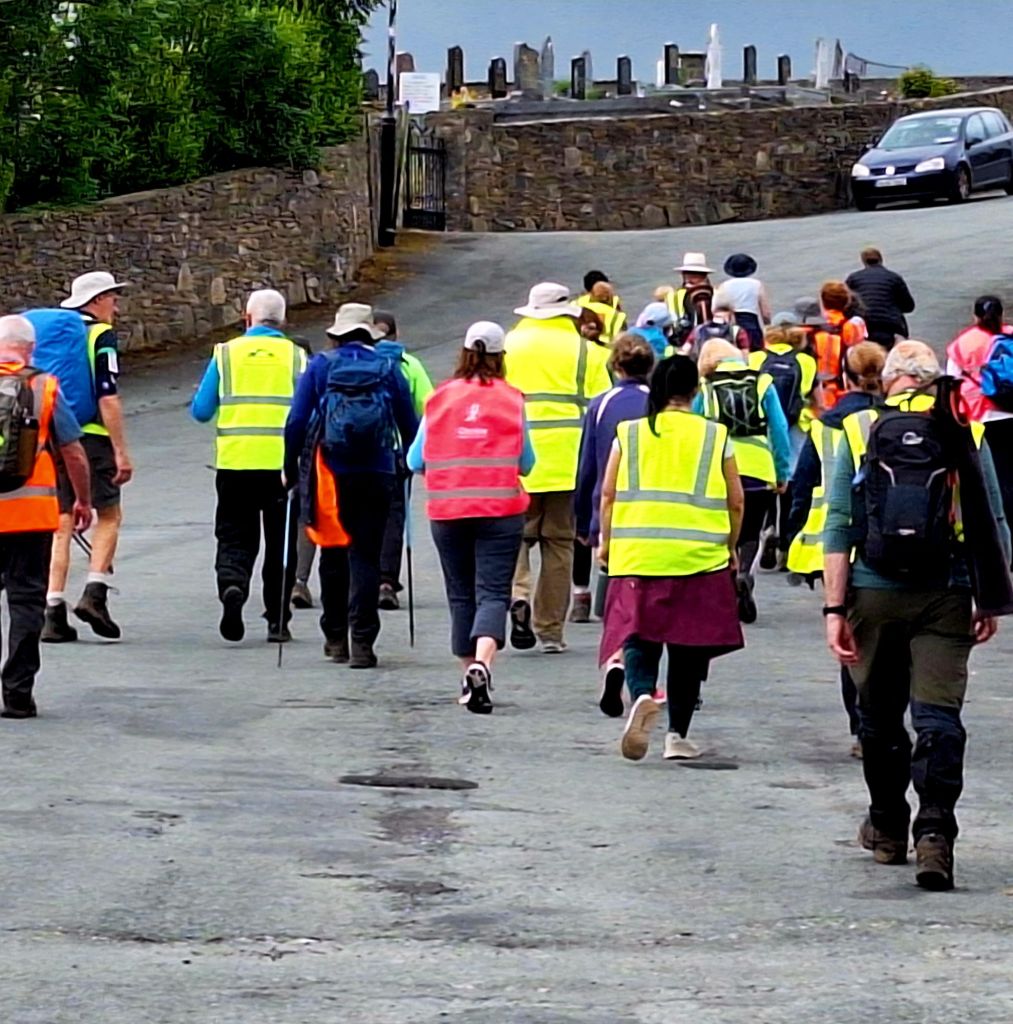
Talk over, ‘the Father’ appeared, complete with walking frame. He said a prayer and wished us luck, and 33 of us set off. Apart from an American man, I was the only other non-Irish person there. Our departure was recorded by ‘The holy Drone’ buzzing above – I kid you not.
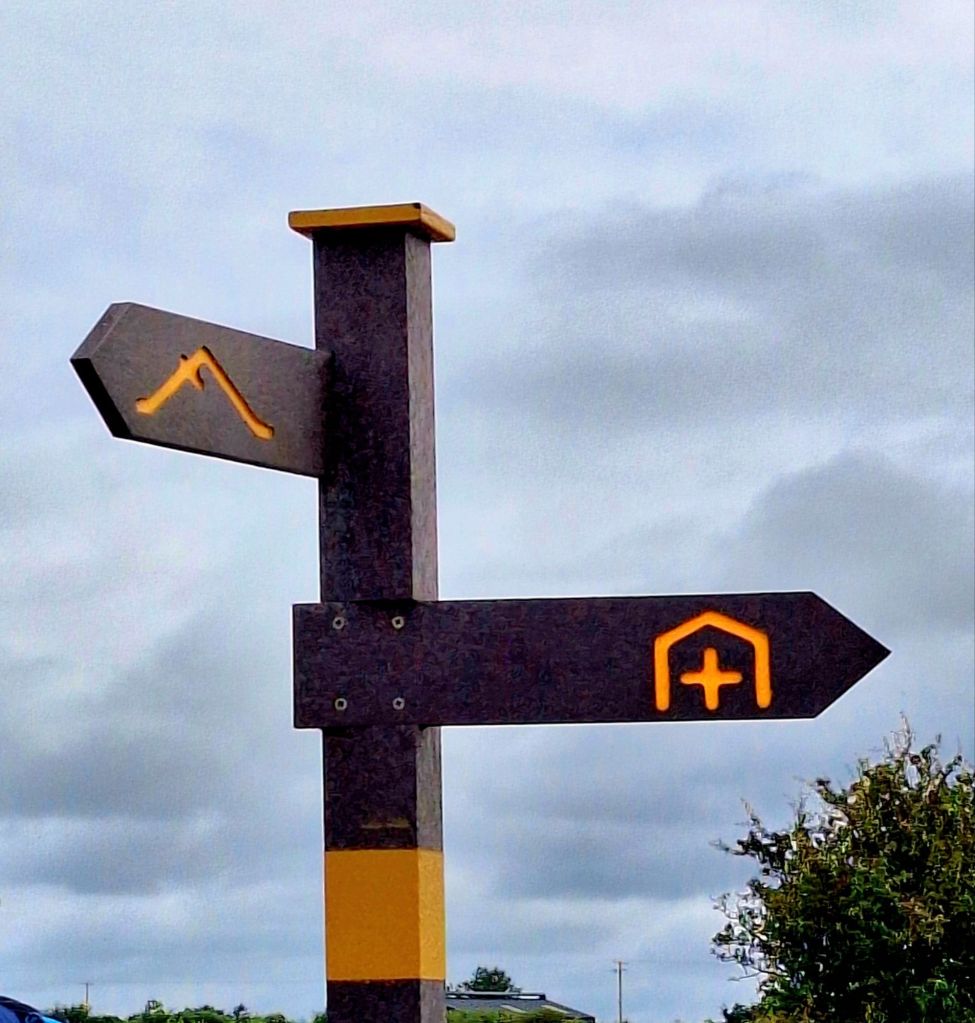
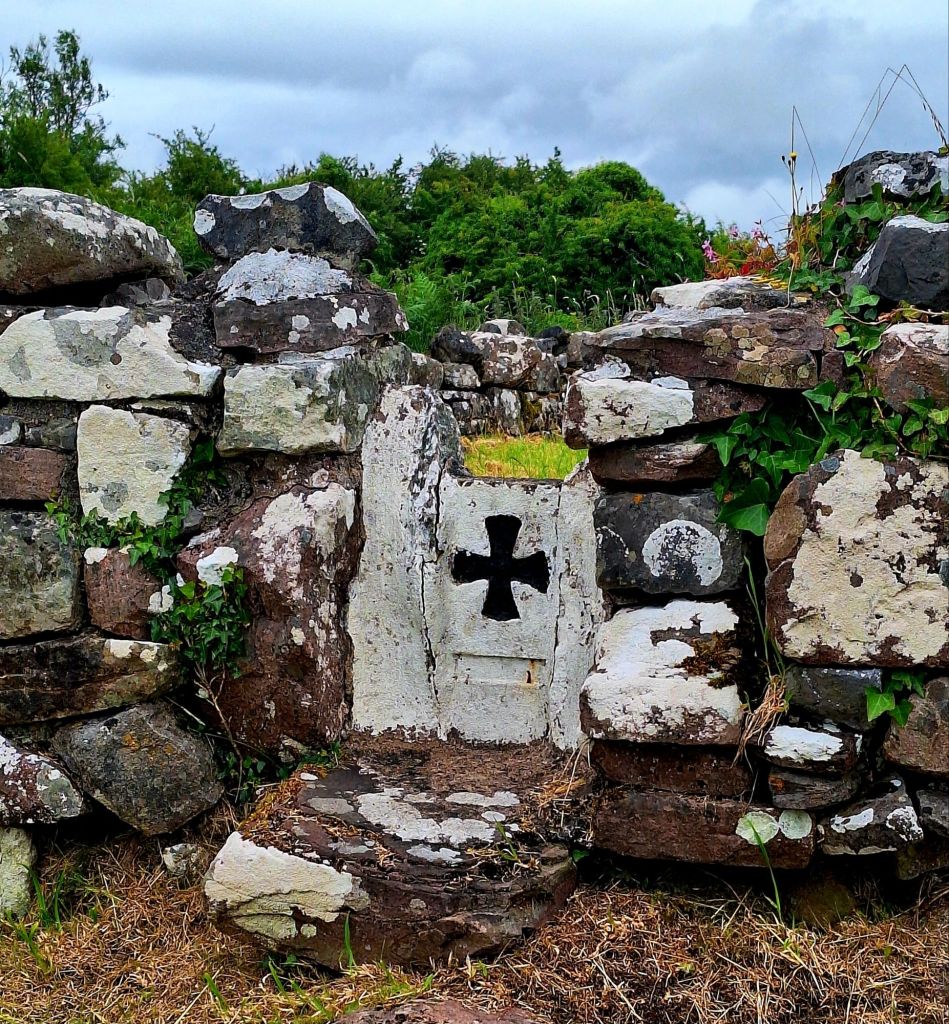
It was an incredibly well-organised event, very much reminding me of LWDA events. The full Tóchar takes approximately +eight hours. Rather than checkpoints, we were escorted the whole way by a support van. It would go ahead and meet us at various points with water, fruit, and snacks. It also served to halt traffic on busy, narrow roads, and of course, if anyone needed to drop out, the van was there.
The weather was kind for the most part—cloudy and breezy, which kept us cool. The route took us through fields, tracks, woodland, and boggy peatland. The latter half of the walk was mostly road.
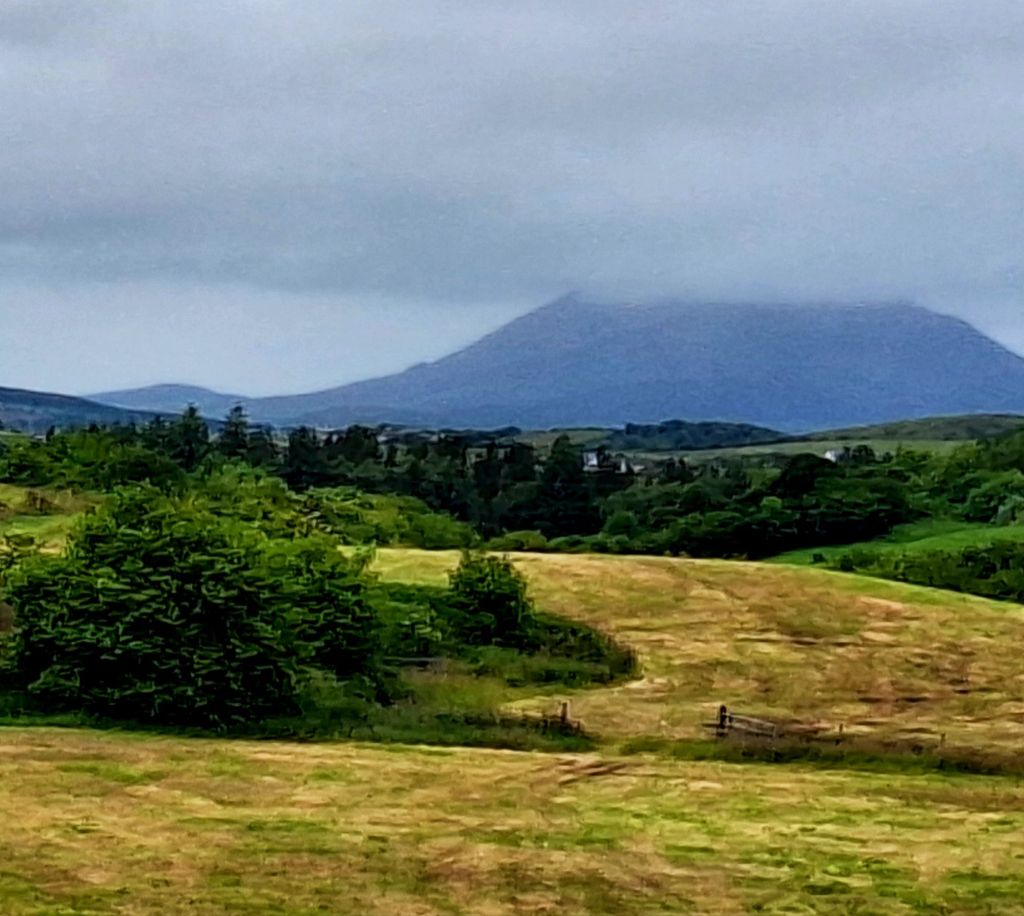
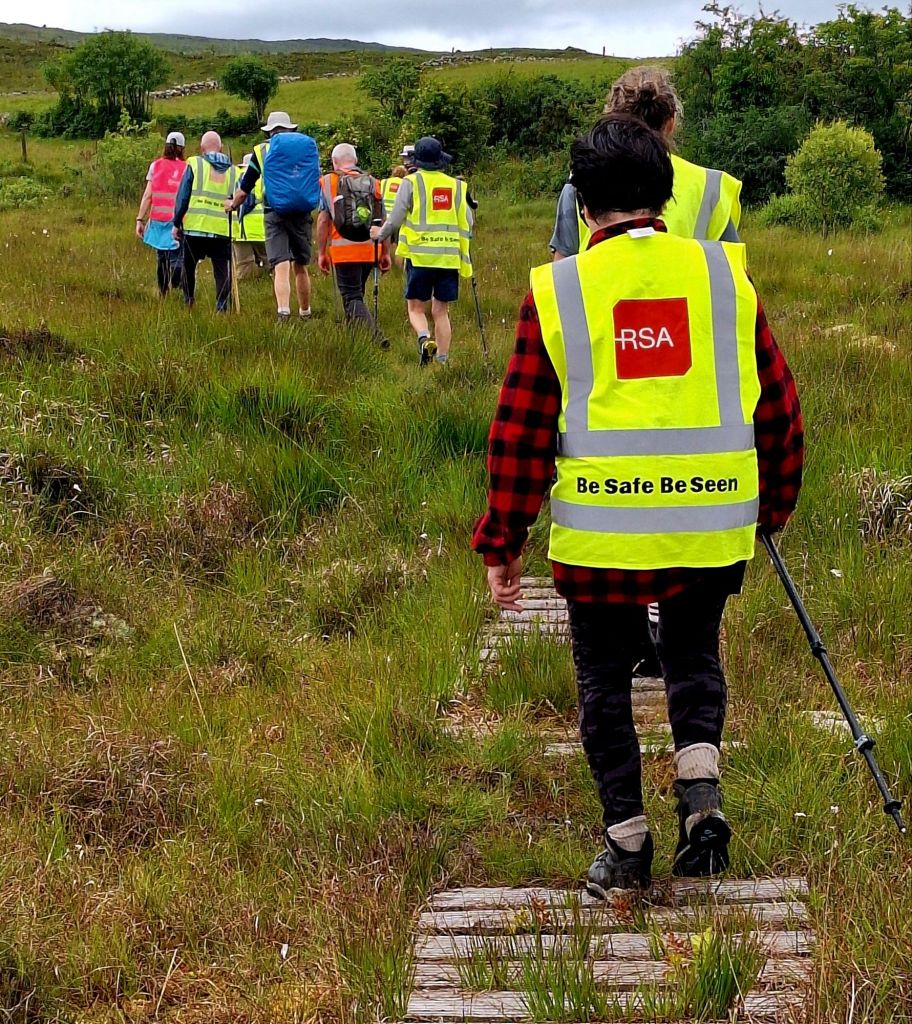

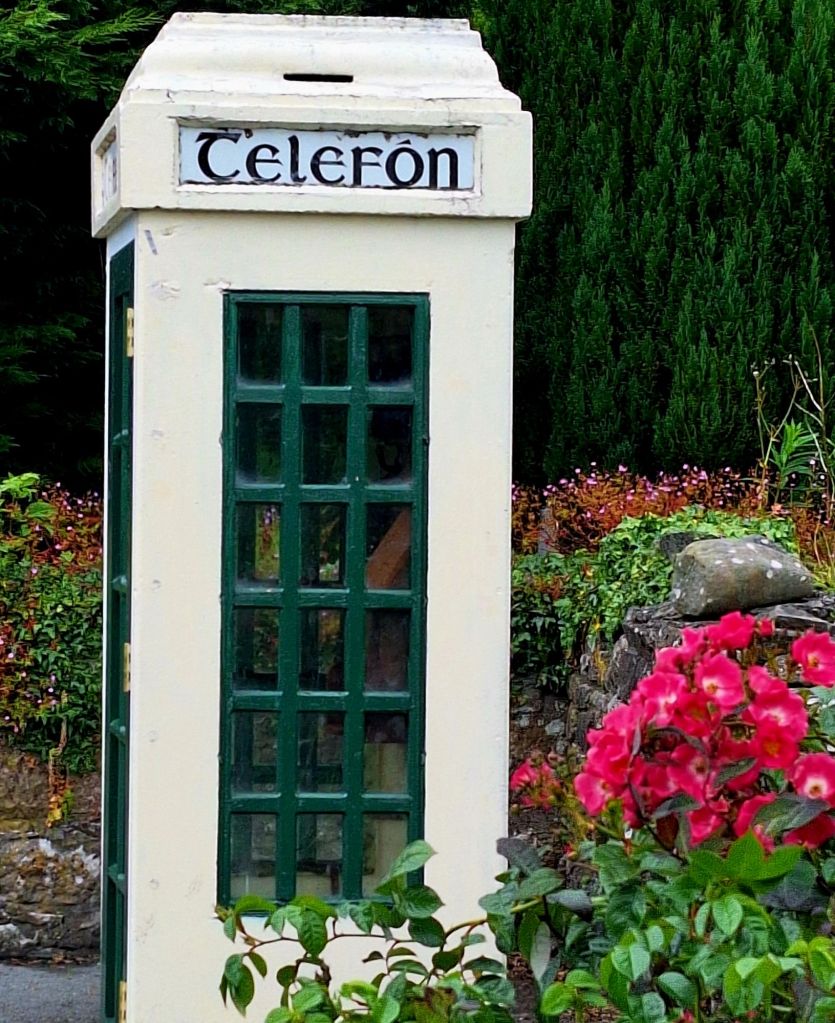
We stopped for lunch at Aghagower, meaning ‘field of the spring’. There are a number of ancient monuments here, some reputed to originate to the time of St. Patrick
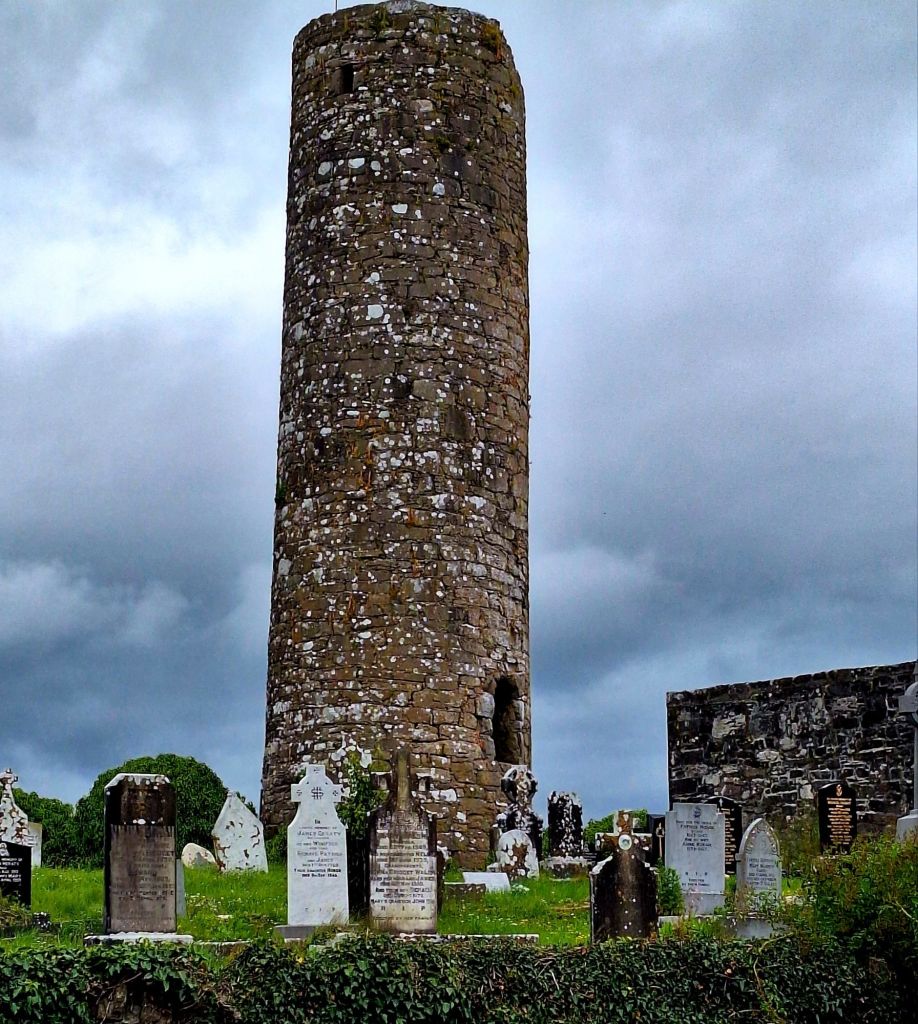
At the centre of the village stands a tenth-century Irish round tower and church.

The ruined Dabhach Phádraig (Patrick’s vat or tub) is a circular bath surrounded by a stone wall, where pilgrims may have washed their feet, or as a washing place.
A sheela na gig was found in a nearby ditch, and was fitted to the eastern wall in 2017. For those of you wandering what a Sheela na gig is, it is a figurative carving of a naked woman displaying an exaggerated vulva.
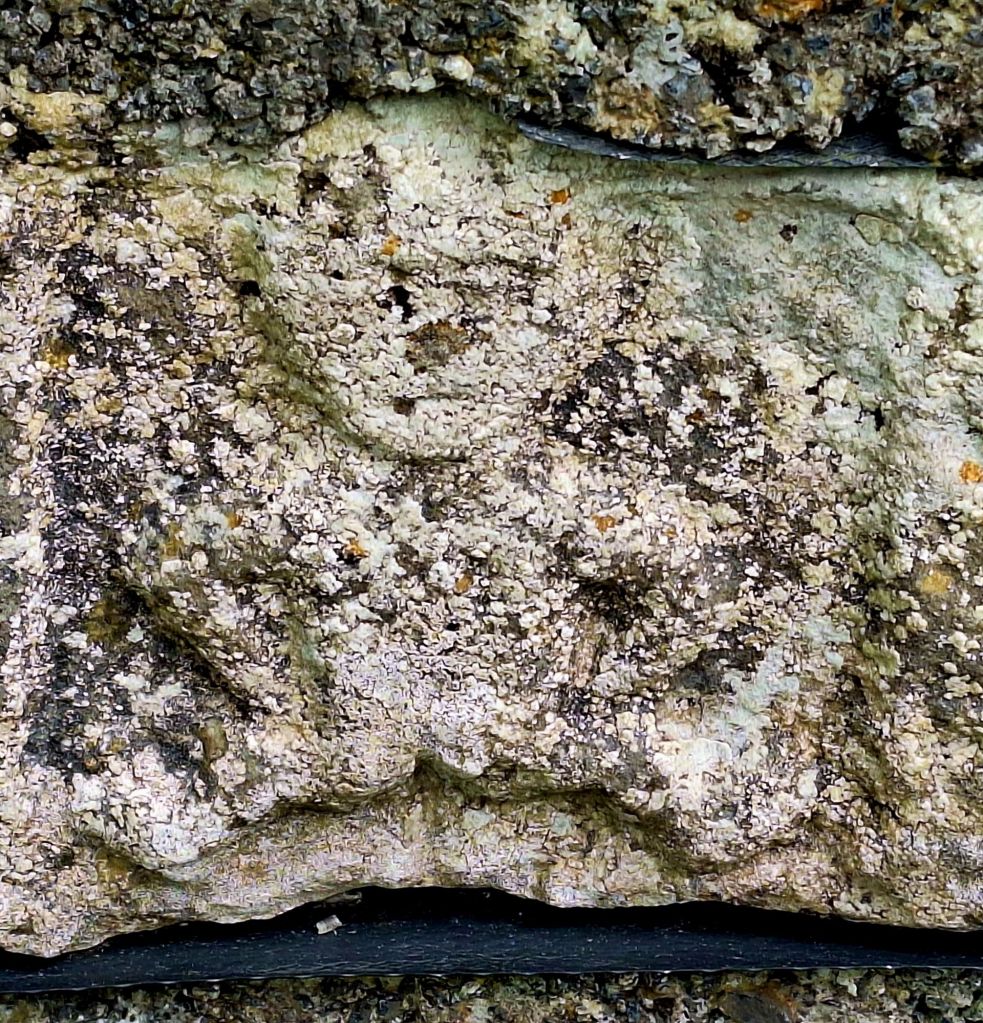
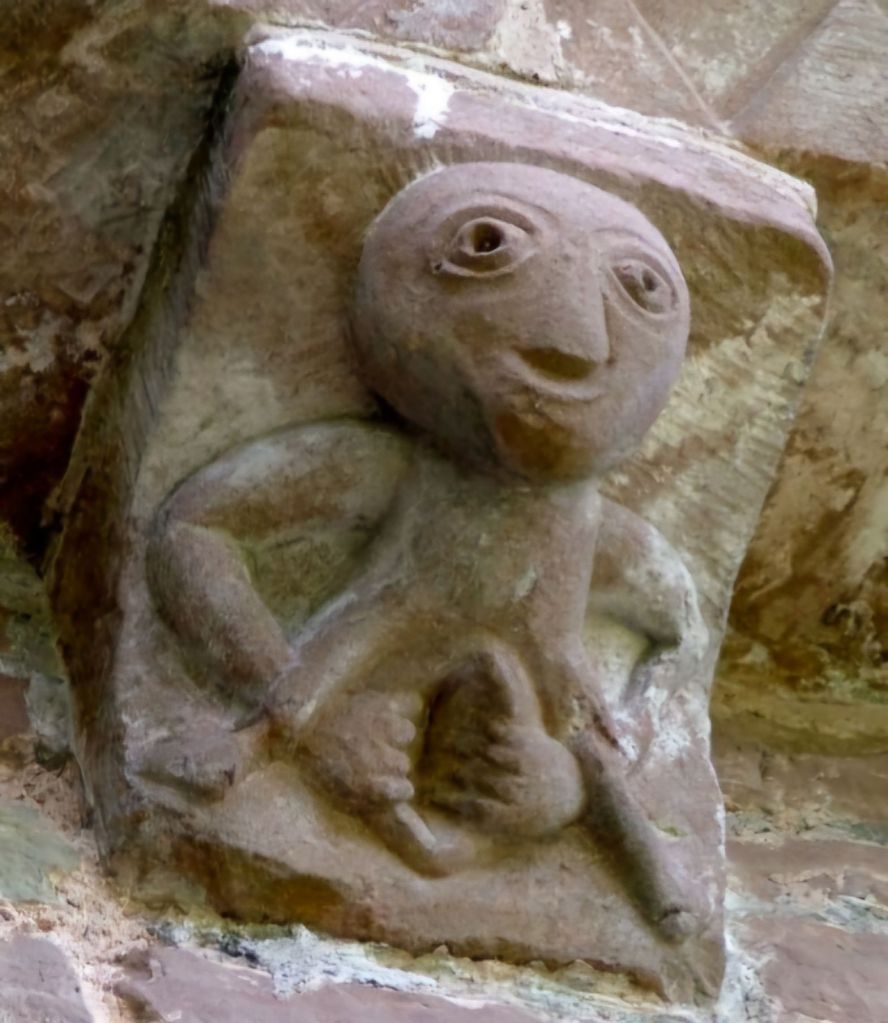
From the Middle Ages, these carvings were found on cathedrals, castles, and other buildings. They may have been used to ward off death, evil, and demons.
The village store come pub, provided much needed coffee and loos. After a lunch break in the pleasant village gardens, we set off once more
There had been much debate around whether or not we would summit Croagh Patrick.
According to ‘Outsider’ Irelands Adventure Magazine.
“Croagh Patrick is a peak steeped in history, religion and mythology. At 764m high and offering breathtaking views across Clew Bay, climbing it is also a rite of passage for hiking enthusiasts”
It would, of course, be weather-dependent, which was now getting a bit murky. A small breakaway group was forming, including yours truly, for those interested in pushing ahead.
Our last proper break of the day was at the Bohen Stone, known locally as ‘St. Patrick’s Chair’. This piece of rock art is believed to have been carved as early as 3800 BC.
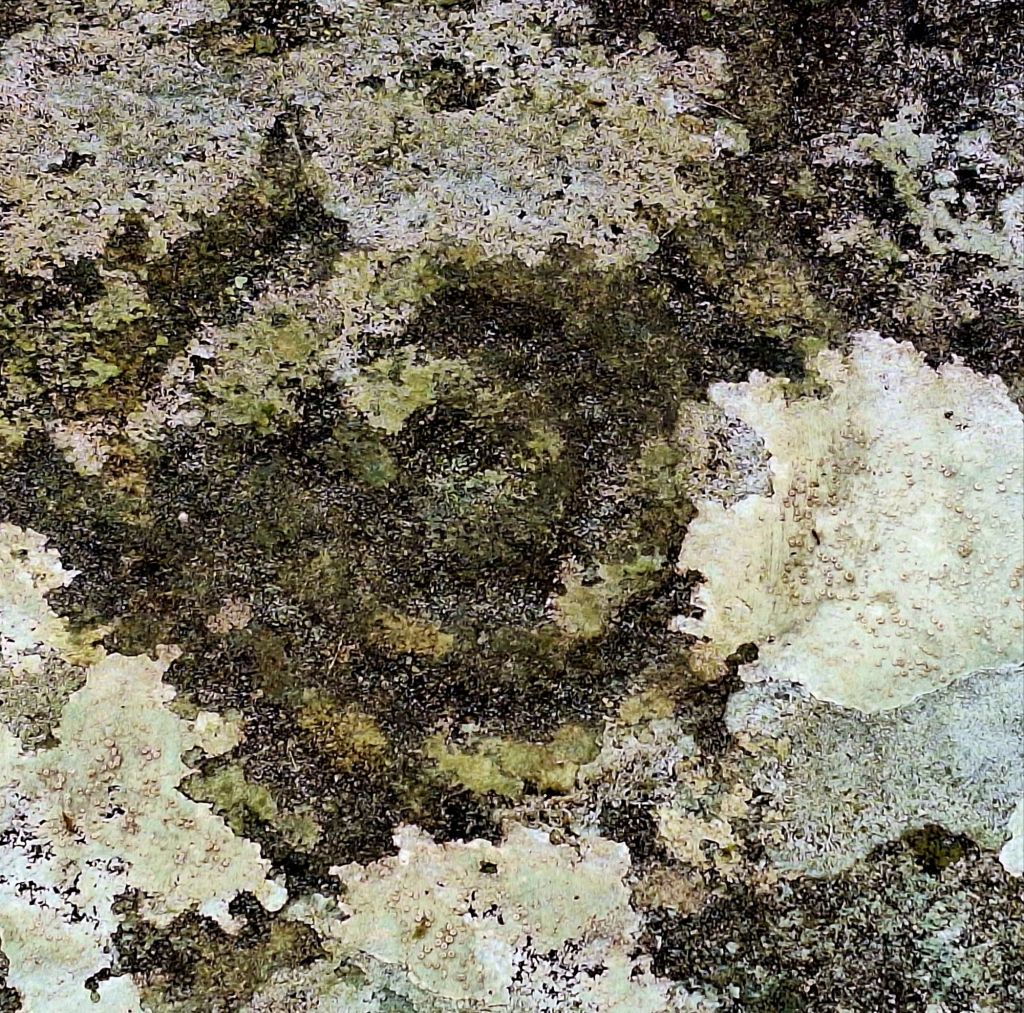
We were invited to put down our ‘sharp rock’ and choose a pebble that Richard had arranged on the Bohen Stone
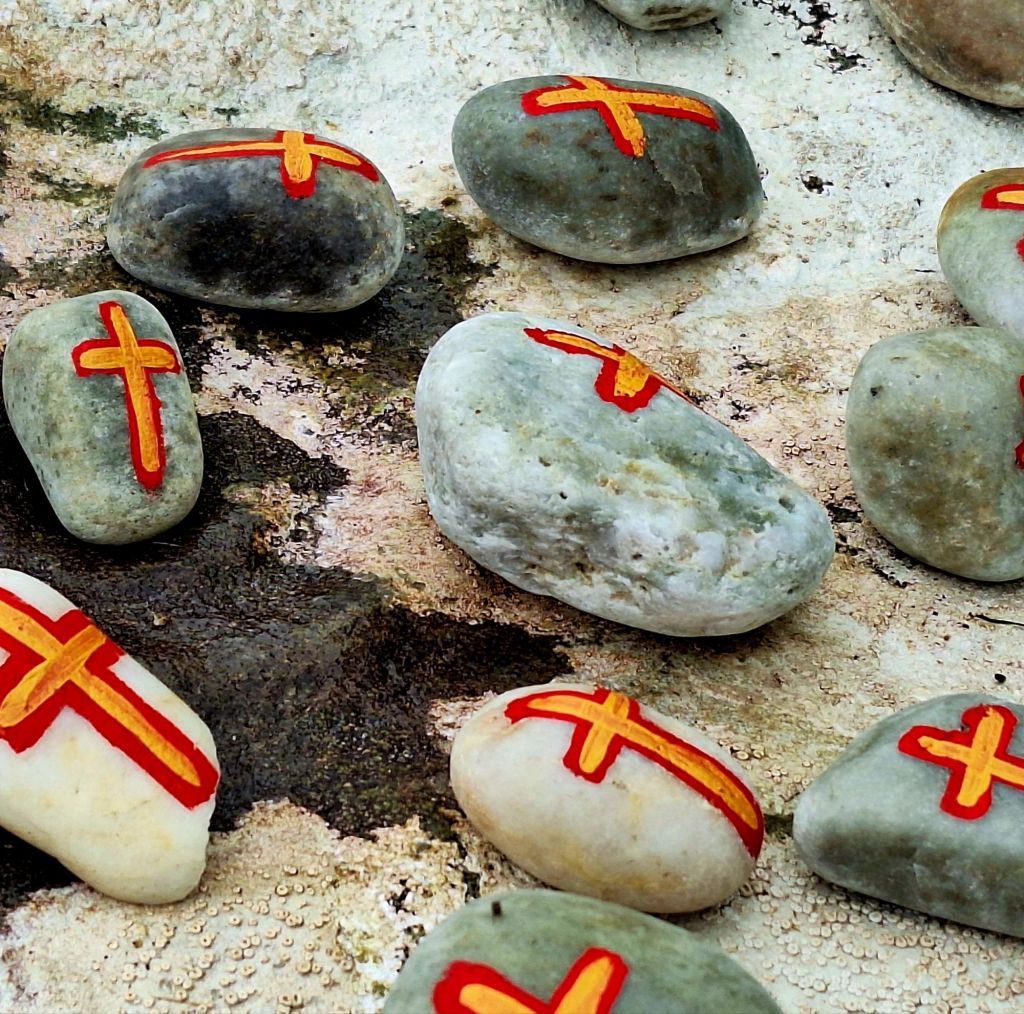
Conversation then turned to who was still aiming for the summit of Croagh Patrick, or the ‘Reek’ as it’s known in Ireland. Three of us were still keen, and Richard advised that if we were to go, we should go now. We needed to get up and back in time to catch the bus, and he cautioned us not to take any risks. Mist and mizzle had rolled in; visibility would be poor on the mountain.
The leader of our little pack was a short, stout lady of considerable fitness. She had been going at a cracking pace all day and wasn’t slowing down.

She set off at a brisk pace, and thinking we must be pretty close to Croagh Patrick, so did I. Soon, we left the rest of the group behind. We marched and marched, but the mountain and its trailhead didn’t seem to get any closer. About six kilometers later, we reached the mountain rescue hut.
The bus and driver were there to check us out. I still felt fresh, or so I thought. We were given safety instructions and were joined by a fourth person, making us two women and two guys aiming for the summit.
At about 300 meters on the mountain, I realised my error. It was very steep, I had hit a major wall, and my engine was empty. I was really struggling and didn’t want to hold up the other three or put them in jeopardy. Feeling uncertain, I thought about going back to the van, but by the time I’d walked back down, it might have moved on to Murrisk, our endpoint.
As a group, we chatted and considered our options. We were ascending the far side of the mountain and would come back down the other side onto the main route, so I was pretty committed at this point. We decided to continue onto the plateau and assess again.
Ascending very slowly, my legs were now barely holding my weight. I felt dizzy, and the rocky, uneven ground made things even worse. I’d never experienced this before. If you’ve ever seen marathon runners lose their legs, it was like that. (My mother is now reading this and having a stroke!) Shoving glucose tablets in my mouth, I unsteadily continued up, step by step, under the watchful eyes of my companions who were a few feet ahead.
It was awful to feel my body failing me, but of course, it wasn’t. It had faithfully carried me 22 miles. It now needed to rest, and I was expecting more than it was able to give. I had also been carrying my hiking poles in my pack all day and forgot to use them. Why?
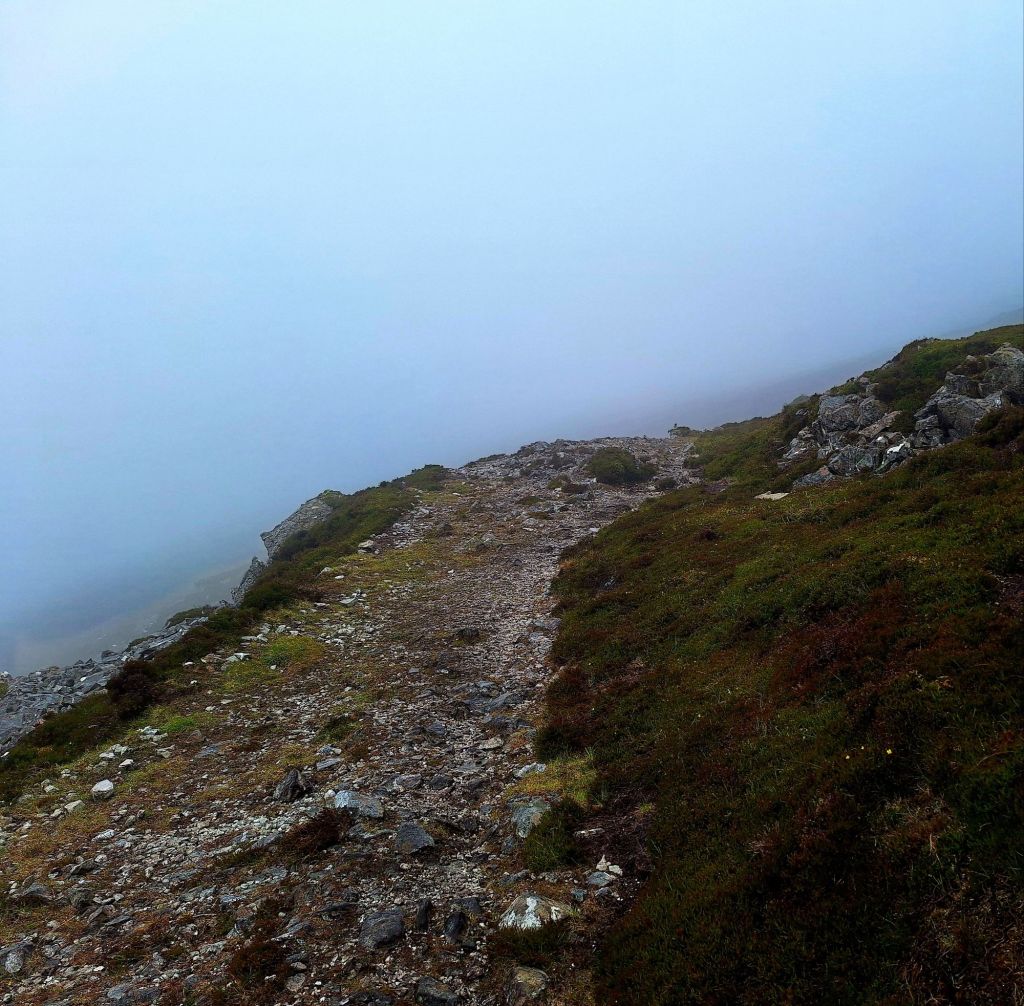
Finally, we reached the plateau. Conditions were not good, and we were soaked through. Two continued to the summit, facing an additional hour’s climb and return, navigating steep steps.
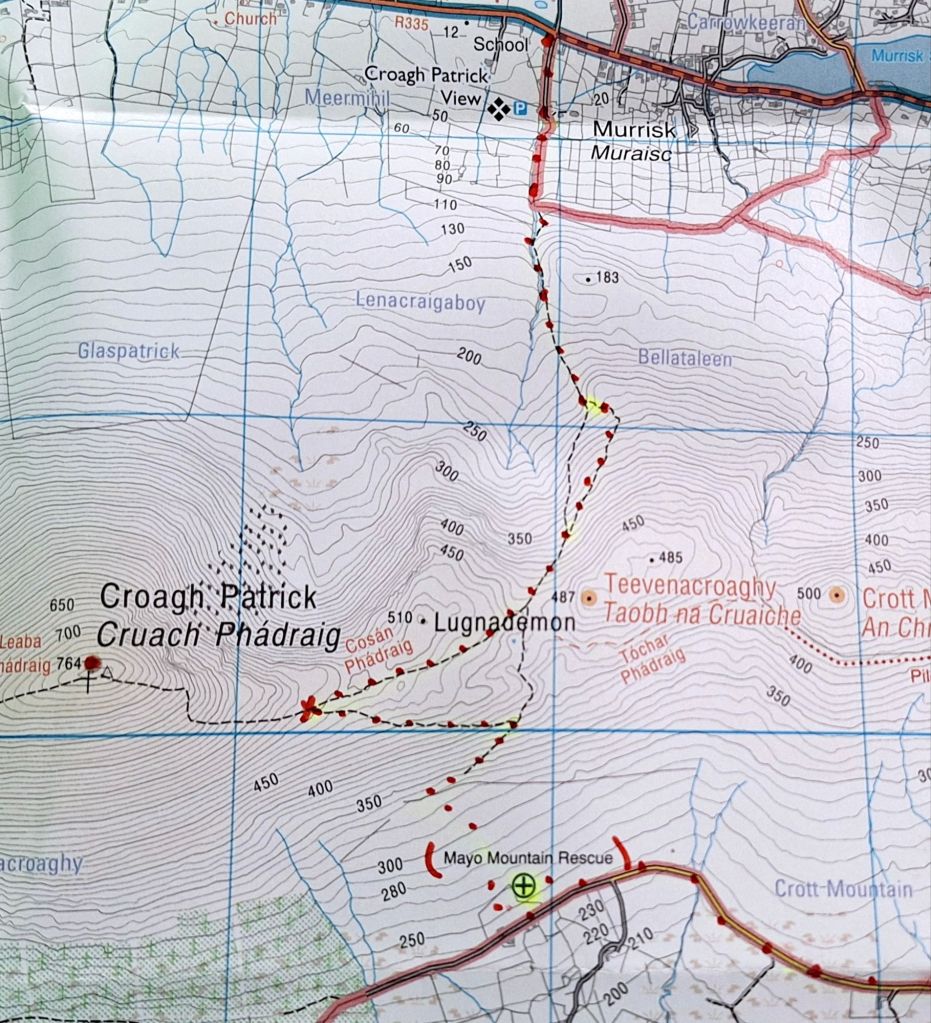
John and I headed down; I had nothing left in me to continue. It’s wise to know when to stop. My legs were now starting to cramp badly.
We soon caught up with Richard and the rest of the group. They had walked up as far as the saddle and were now scattered along the long path down. Richard waited for the summit heroes, and we kept moving.

Coming down out of the mist, we could now see views of Cley Bay. We could also see that the Irish Coast Guard had arrived; someone had taken a tumble, though thankfully not one of our group.

Although a few meters away, the force of its rotating blades nearly knocked us off our feet.
Finally, about 7:30 PM, we reached the main carpark—wet, tired, cold, and very relieved. I felt like kissing the ground, but I would never have got back up. Now I know why people were wishing me luck. A warm pub was most welcome while we waited for the bus to return us to the Abbey, once the last walker had returned.
Out of 33 participants:
- Two reached the summit
- Two (John and I) reached the plateau
- 13 made it to the saddle
We reflected on the day, congratulations all around, and I got my 5th Pilgrim stamp, seven years after I started this quest.
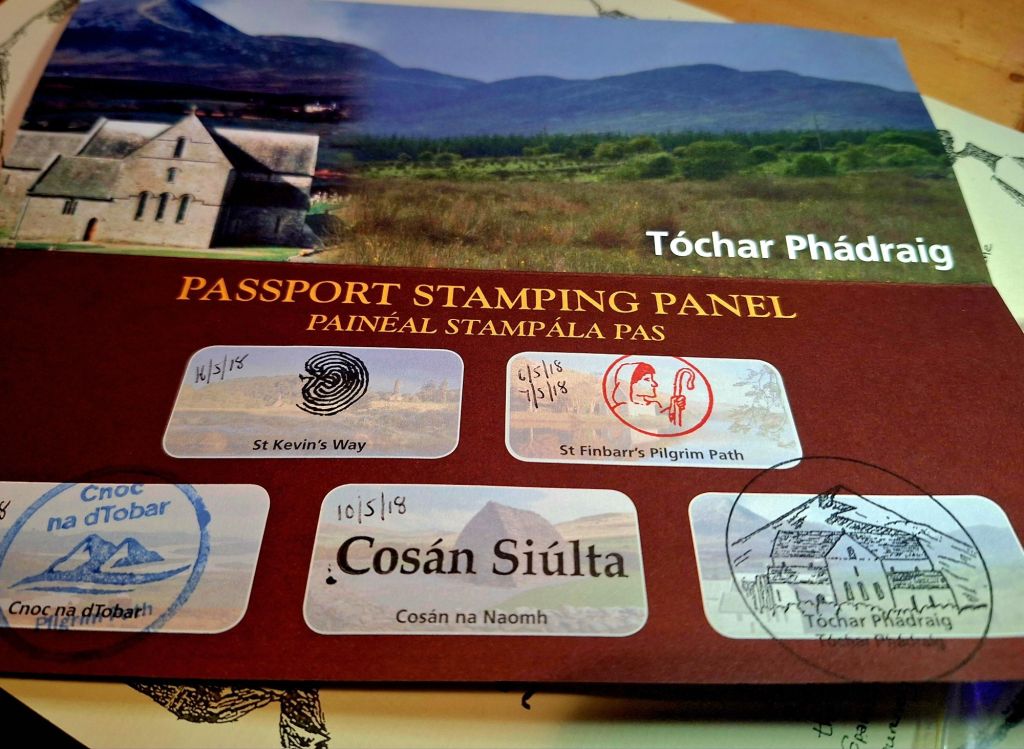
I would I would never have imagined myself doing this kind of organised walk. But despite the trial on the mountain, it had been a great day with a great bunch of kind people. There were wonderful conversations and laughs with like-minded souls, all coming together at this place in time with a shared goal.
Around 8 PM, the bus arrived, and low and behold, there was ‘The Father’ with his walking frame and personal assistant, giving out certificates and congratulating everyone.ever have imagined myself doing this kind of organised walk. But despite the trial on the mountain, it had been a great day with a great bunch of kind people. Some great conversations and laughs with like-minded souls. All coming together at this place in time with a shared goal
Around 8 pm, the bus arrived, and low and behold, there was ‘The Father’ with his walking frame and personal assistant, giving out certificates and congratulating everyone

We arrived back at Ballintubber Abbey by 9 PM. I headed for the van and did my best to wash with wet wipes before falling into a deep sleep.
Reflections: Don’t walk 22 miles and expect to romp up a mountain that most Irish folk do every year. I should have dumped my pack in the van; my legs had been taking the load all day. And I definitely should have used my bloody sticks that had been in my pack all day!
But it was a great, if not bonkers, achievement. Next time, I’ll just do a leisurely walk up the mountain.


 Tales From The Trails
Leave a comment