For our Mum, who never got to see us do this together, RIP 14/10/2024
Wednesday May 7th 2025
CWT Day 13: Kinlochailsh (Benmore Lodge) to Inchnadamph – Approx: 9 miles – it felt a lot longer
A warmer night, with dry tents and an early start. We broke camp 7am and headed off on the 4×4 track. But once out of the forest area, the track continued onto boggy moorland. There are faint paths, head for the sheep pen, and small footbridge, indicated on OS Maps. It’s barely visible on the ground, but it’s a higher path and a bit drier.
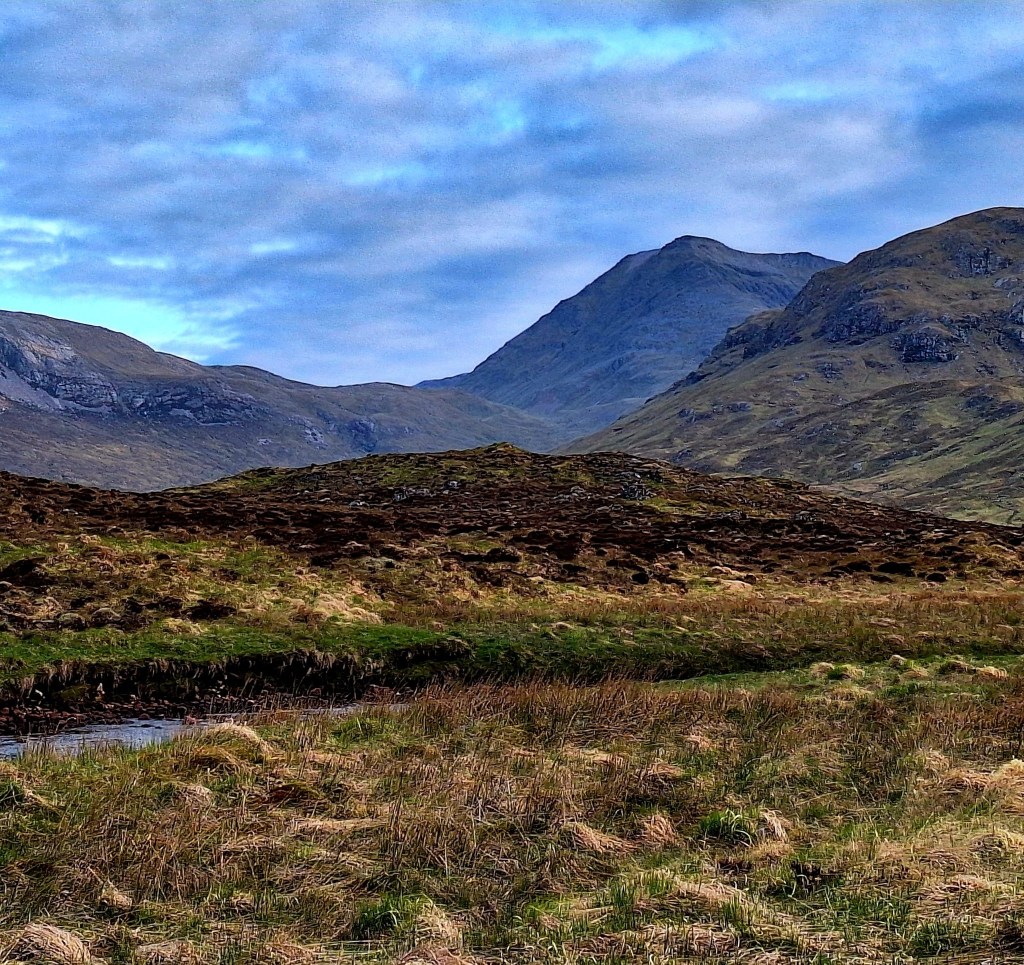
From the 3rd ford there are posts that guide you across the moor. They are not obvious, and appear, then disappear. At the 5th ford head down and cross the river. Stay to the right as long as possible as the bog at the bottom will lead you a merry dance.
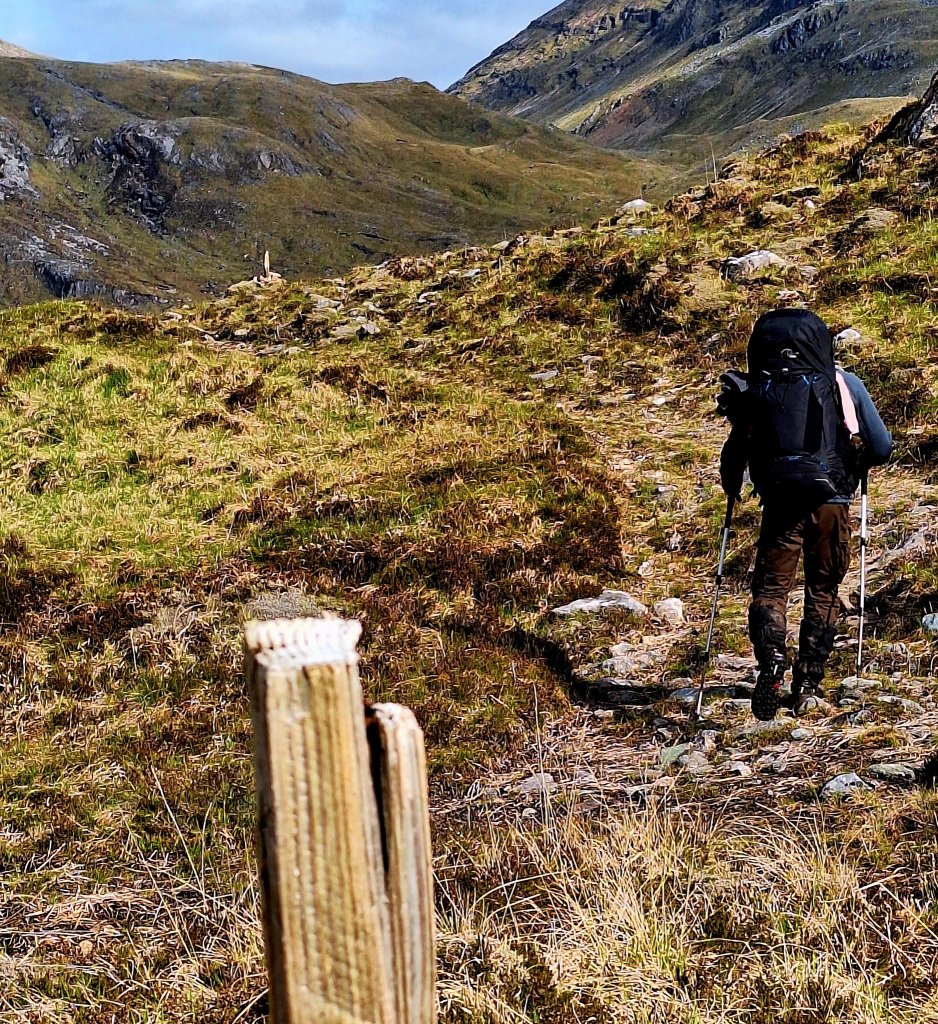
The bealach (mountain pass) is short and mighty, it was quite the slog up. We were tripping over Common lizards and frogs, widespread in the Scottish Highlands, in moorland and boggy areas.
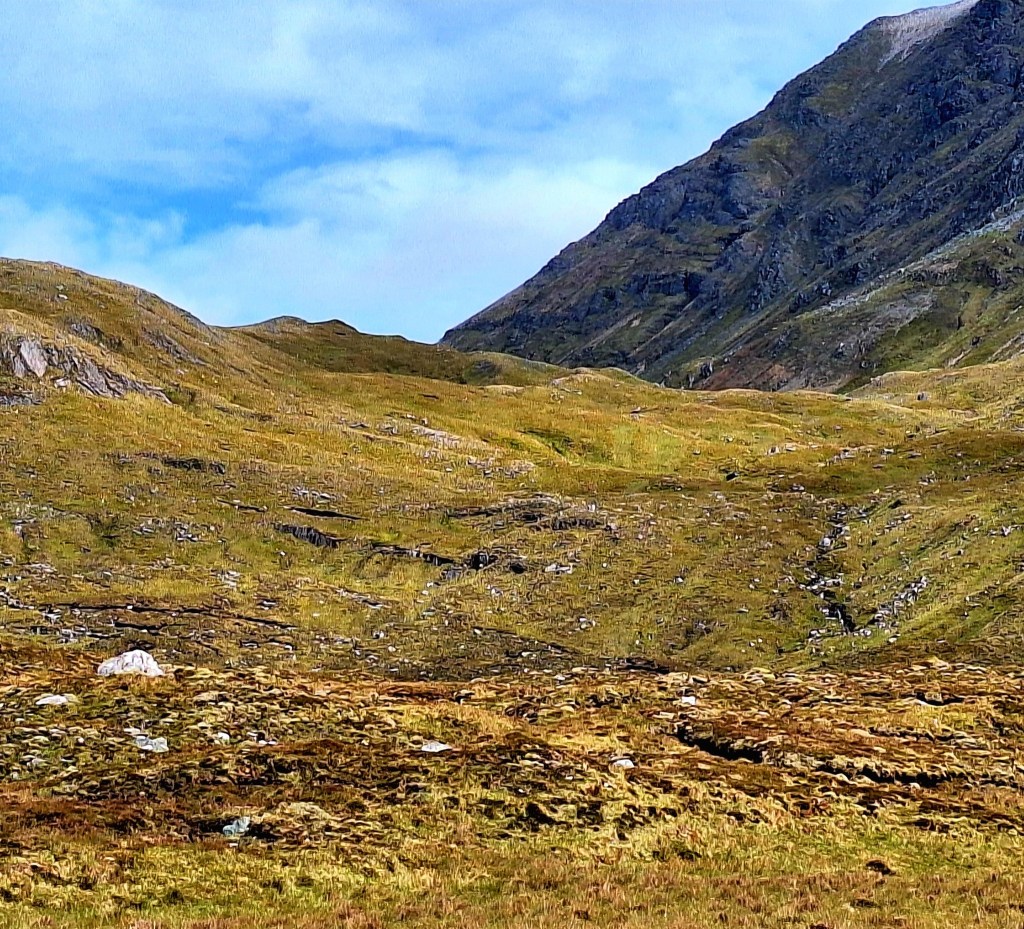
There were great views back over Oykel Glen a huge glacial valley.
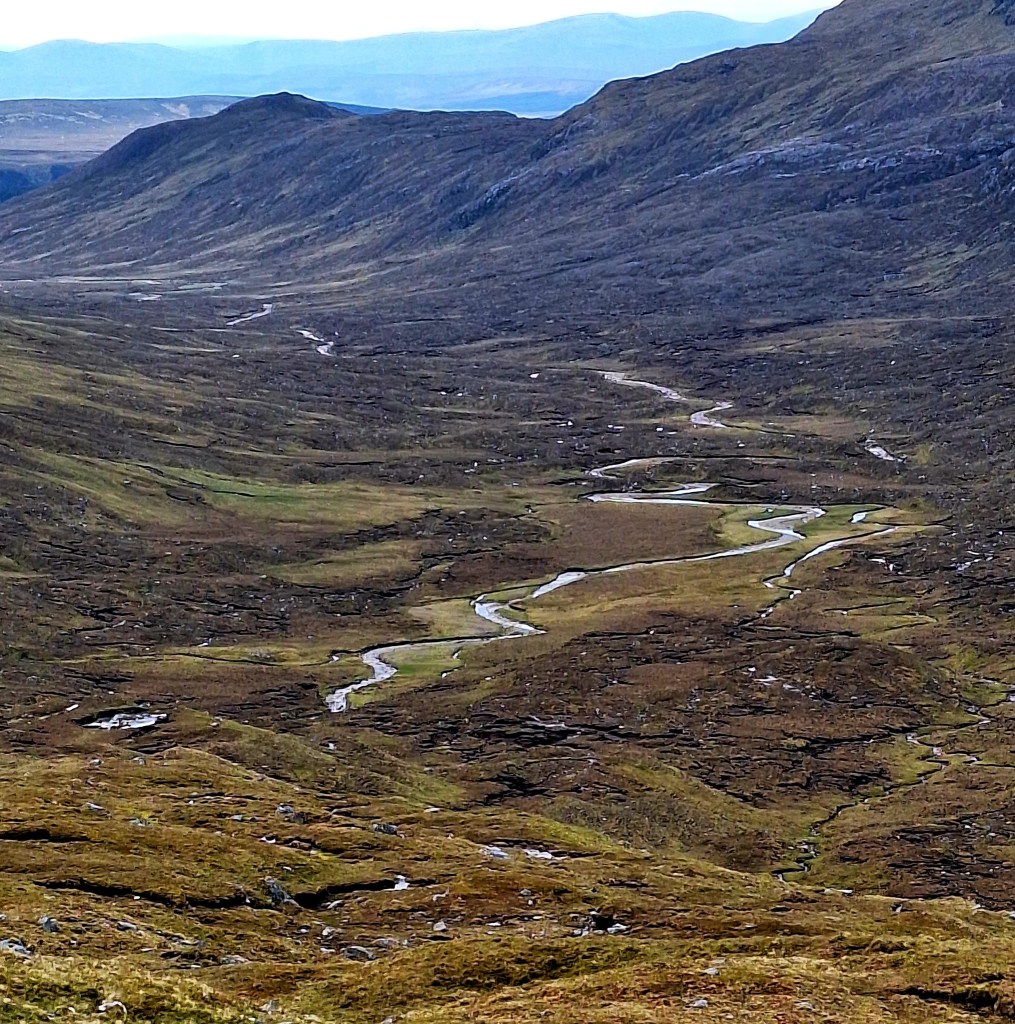
It was silent except for the occasional “drumming” of a snipe. Snipe produce this unique sound with their outer tail feathers during a display flight, a sound that can carry surprisingly far across the open moorland.
There’s an odd lack of mammals, other than deer. We haven’t seen a single rabbit or hare the whole way, and surprisingly, no sign of eagles or foxes either. No skylarks today. But we did hear Wren, and Meadow Pipit, along with the distinctive call of a Golden Plover – a beautiful upland wading bird often found on these very moors. I was surprised to see these birds here, but they are attracted to these seemingly barren hills for their open moorland and boggy ground, which provide ideal nesting sites and an abundance of insect prey during the breeding season.
A nice deer terrace guided us up and over the bealach.

Finally at the top of the bealach, the passage will have geologists rubbing their thighs. Powerful natural forces have pushed and shaped this land. We are now in Assynt. Famous for its unique and dramatic geology, often described as a ‘geologist’s paradise’ due to its ancient Lewisian Gneiss, Torridonian Sandstone, and Durness Limestone, which create its distinctive isolated mountains (Assynt’s ‘cnocs’).
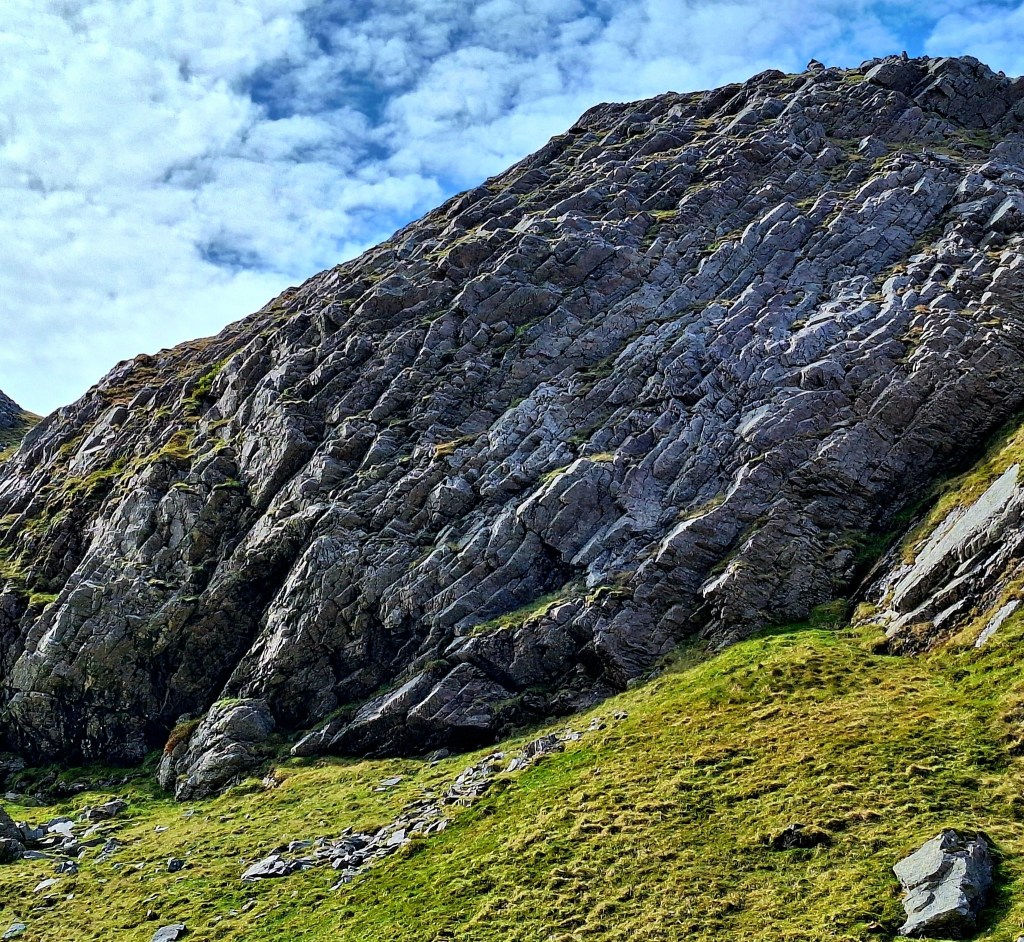
We stopped for a snack and watched a herd of deer quietly grazing behind us. On route today, we passed three carcasses, what killed them, and what ate them, should we fear a highland beast? But, apparently, in wild Highland areas, deer carcasses are a natural part of the ecosystem, resulting from natural mortality and disease, then scavenged by species like Golden or White-tailed Eagles and foxes. Sadly, their presence doesn’t guarantee a sighting
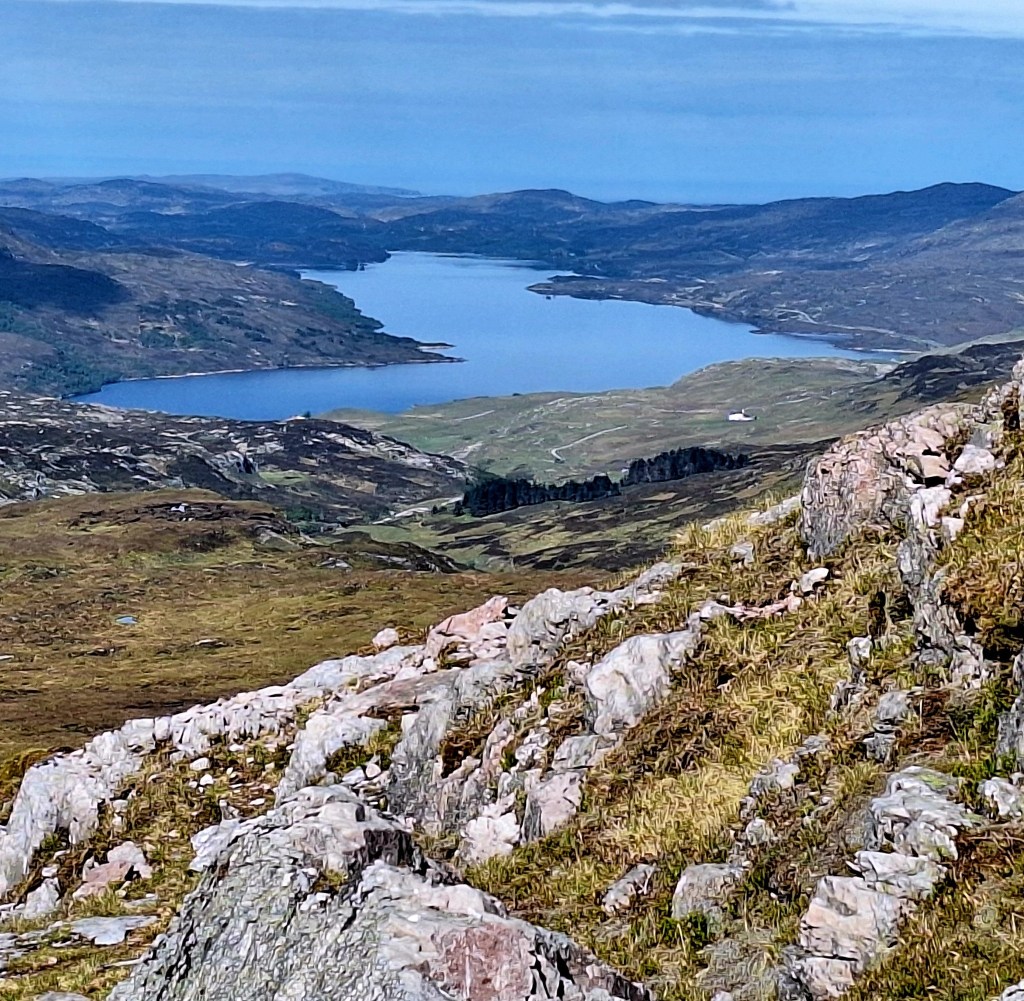
From this vantage point, there are stunning views down Gleann Duhb to Loch Assynt, which looks a hop skip and a jump away. But don’t be fooled, it’s quite a tricky and time-consuming descent on narrow tracks and some scrambling. Loch Assynt is a freshwater loch in Sutherland, notable for the atmospheric ruins of Ardvreck Castle and Calda House on its northern shore, which add to the dramatic landscape – we pass this tomorrow.
To reach Inchnadamph, you have to cross the River Traligill, which is in a substantial gorge. There is no easy way down; just pick a safe spot and don’t die. But… first you have to navigate the BOG. There are faint paths everywhere; these are just hapless hikers who were trying to find their way out. Beware the sink holes … Should you make it to the river, there is a long winding path alongside it, eventually leading to grassy tracks and a gravel track to Inchnadamph Explorer’s Lodge.
The River Traligill is known for the Traligill Caves system, one of Scotland’s longest and most extensive cave networks, formed as the river dissolves the underlying Durness Limestone. It wasn’t until I googled this later, that I realised I had walked up to the ‘Bone caves’, when I was on the NC500. Having accessed them from the road, I didn’t recognise the area at all
The gravel track seemed endless after such a long and tricky descent. My brother now wincing with tired and sore feet. We fell through the door at the explorers lodge and devoured tasty pie (I recommend the mackerel one) and chocolate.
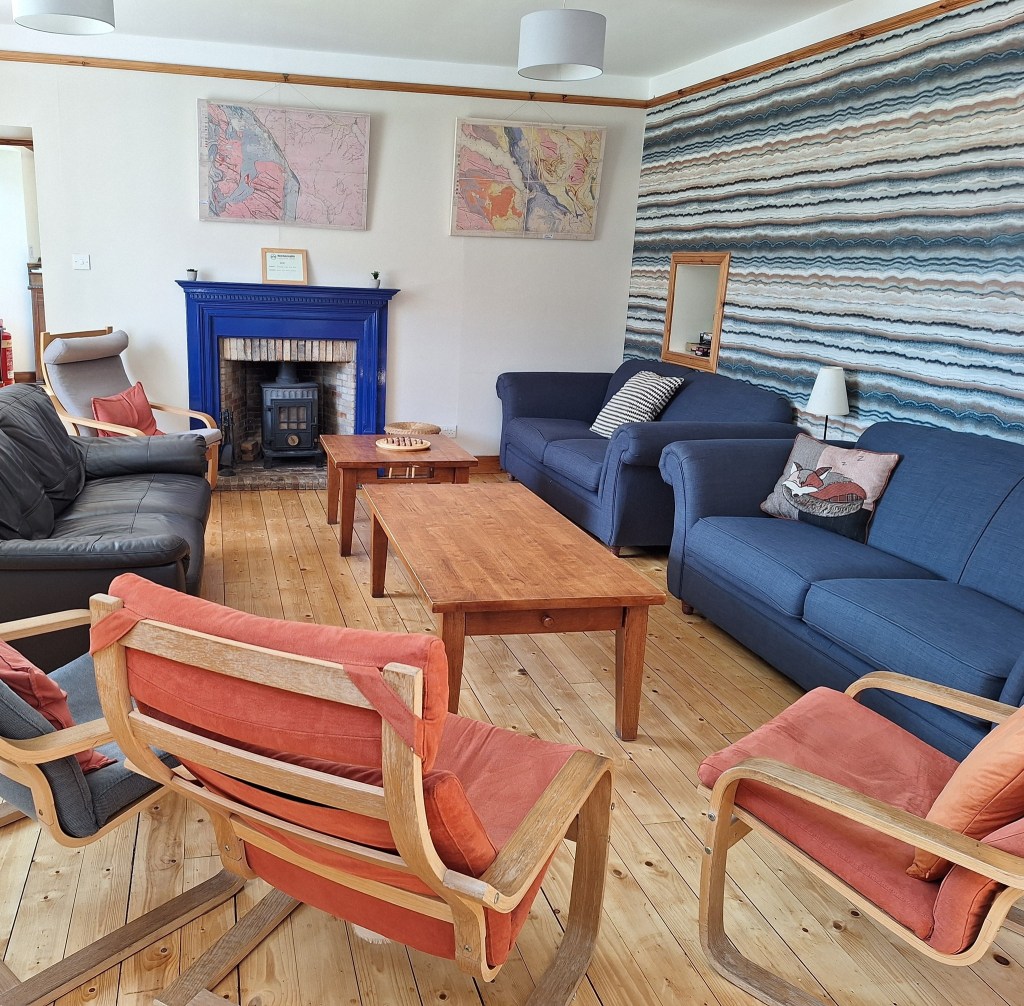

After cleaning our festering bodies and clothes, we enjoyed a relaxing day, under the gaze of Glas Bheinn. The lovely Larse walked in later that afternoon, we first met at Kinlochewe.

Inchnadamph is a significant hub for geologists and cavers. Its unique limestone geology makes it a ‘geologist’s mecca,’ drawing researchers and students interested in the Moine Thrust, while its extensive network of underground passages, including the famous Bone Caves, makes it a hub for the caving community. If only we had time for a day out to explore it all.
 Tales From The Trails
Leave a comment